
Current WeBR Lab research thrusts are broadly in the design of robots, controllers, and devices to rehabilitate, assist, or augment motor function and communication.
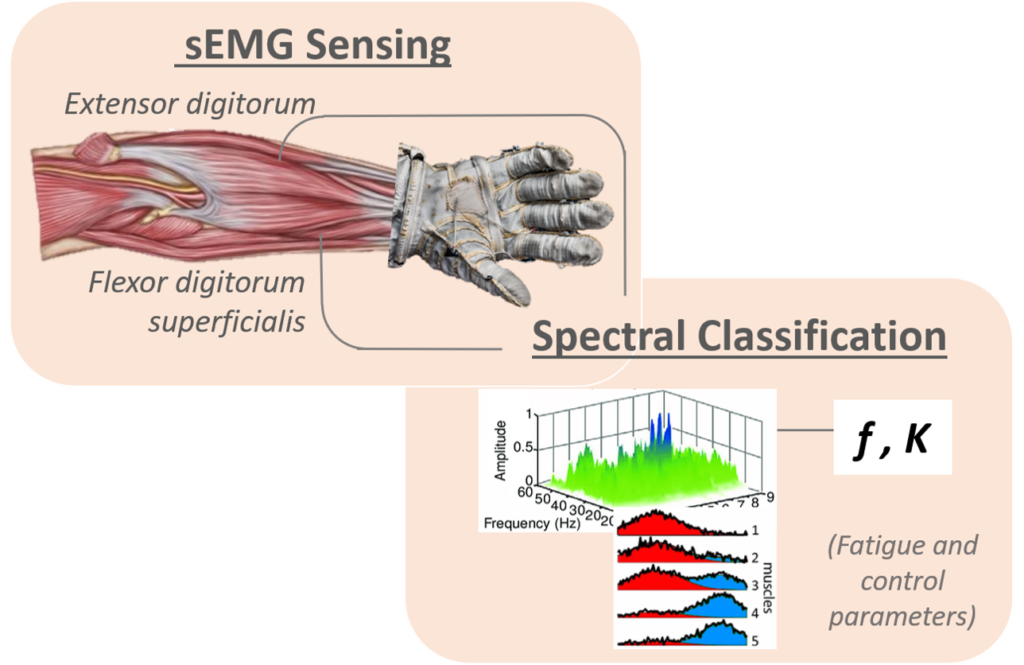
Electromyographic Control
- Intent Detection and Fatigue Compensation of glove-based exoskeletons
- Intent Detection for low-cost prosthetics
Rehabilitation and Assistive Robotics
- Impact of Gravity Compensation on upper extremity movement
- SPAR Glove – assistive exoskeleton
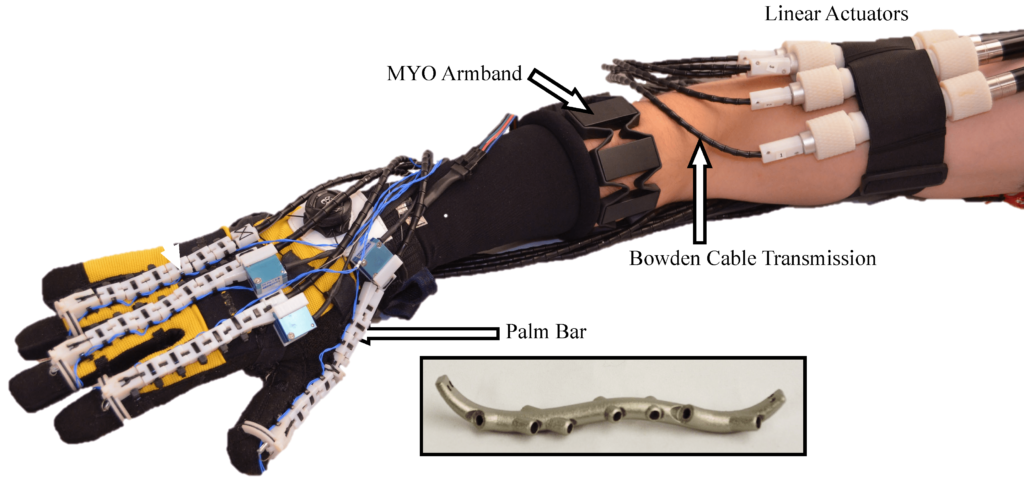
Harmony Exoskeleton projects
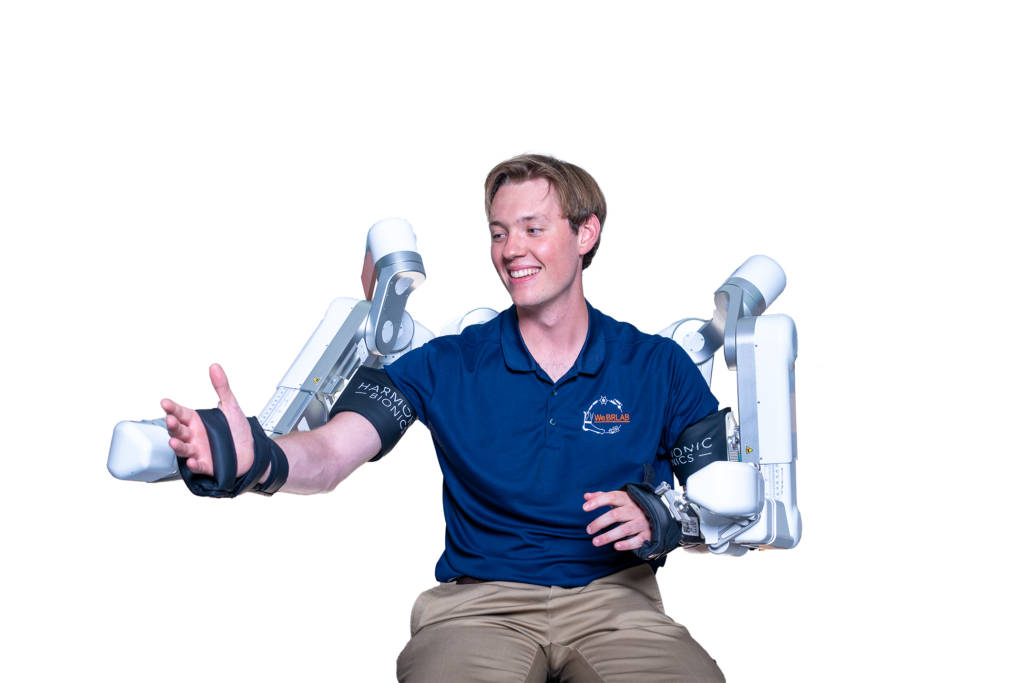
Influence of Exoskeleton-Mediated Interventions on Motor Learning
- Exploring how reinforcing or discouraging certain kinematic synergies with certain exoskeleton control strategies can promote or deter user adoption of specific movement patterns
- Working towards reduced degree-of-freedom interventions that compare with more complex strategies in effectiveness
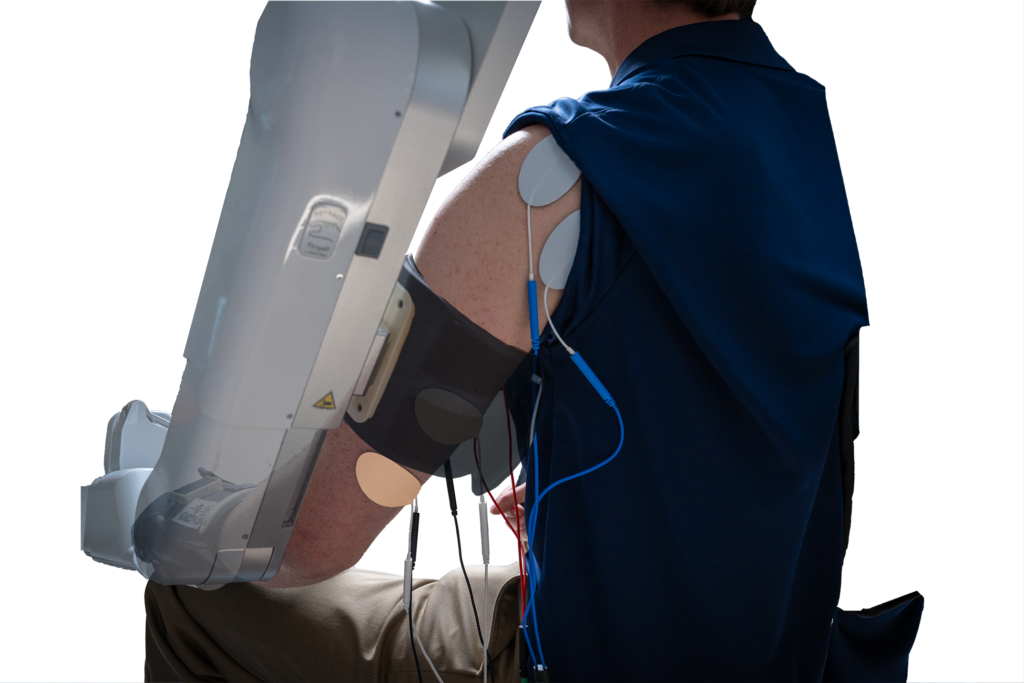
Control and Implementation of Hybrid Exoskeletons for Rehabilitation
- Combining functional electrical stimulation (FES) and assistive torques to produce beneficial movement patterns in the upper body
- Developing new movement assessments with virtual reality to quantify and compare healthy and impaired kinematics
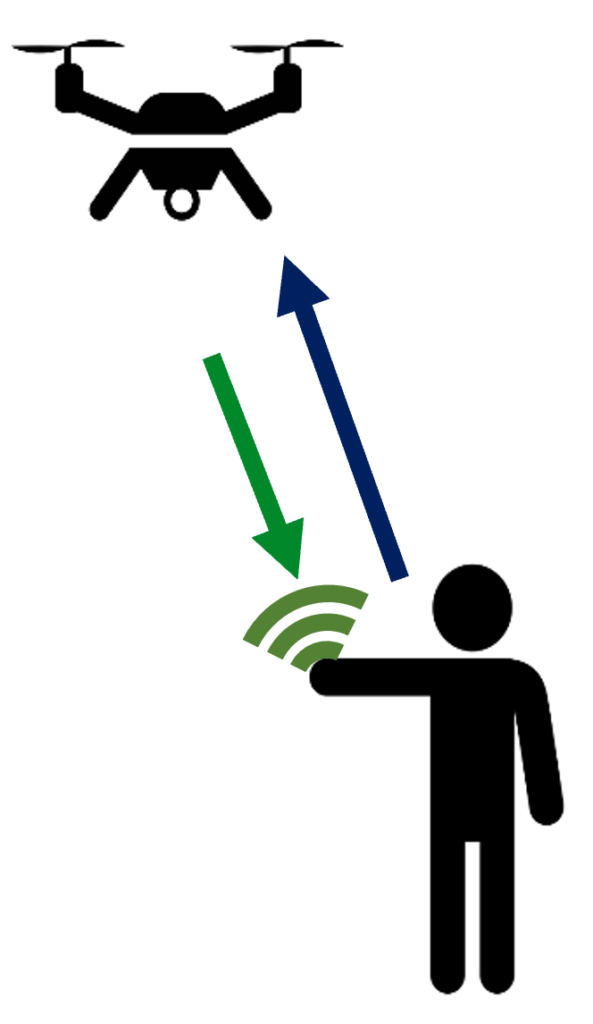
Human-Robot Interaction and Haptics
Biomechanical and Motion Assessment
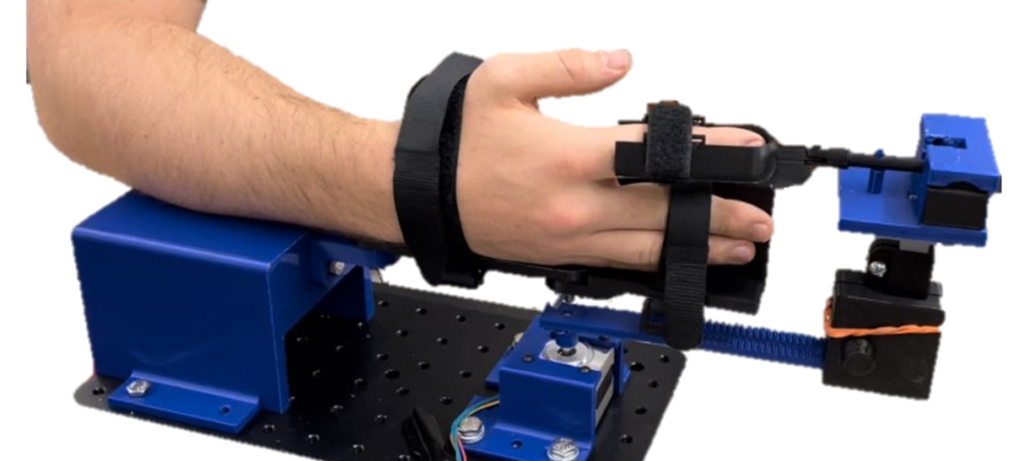
- Estimation of finger joint impedance properties
- IMU-based gait measures
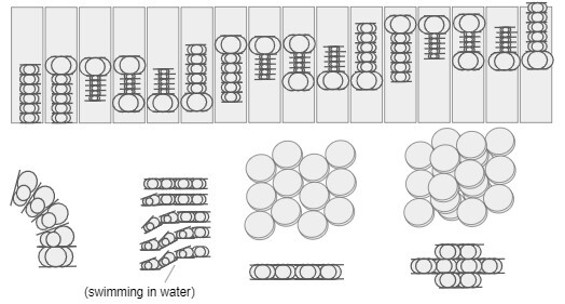
Soft Robot Manipulation and Locomotion
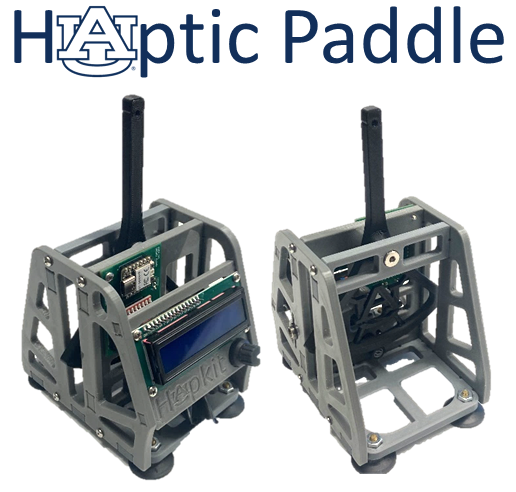
- Low-cost, open-source haptic paddle
- Provides hands-on STEM experiences for middle and high school students.
- GitHub Resources (CAD, instructions, bill of materials)

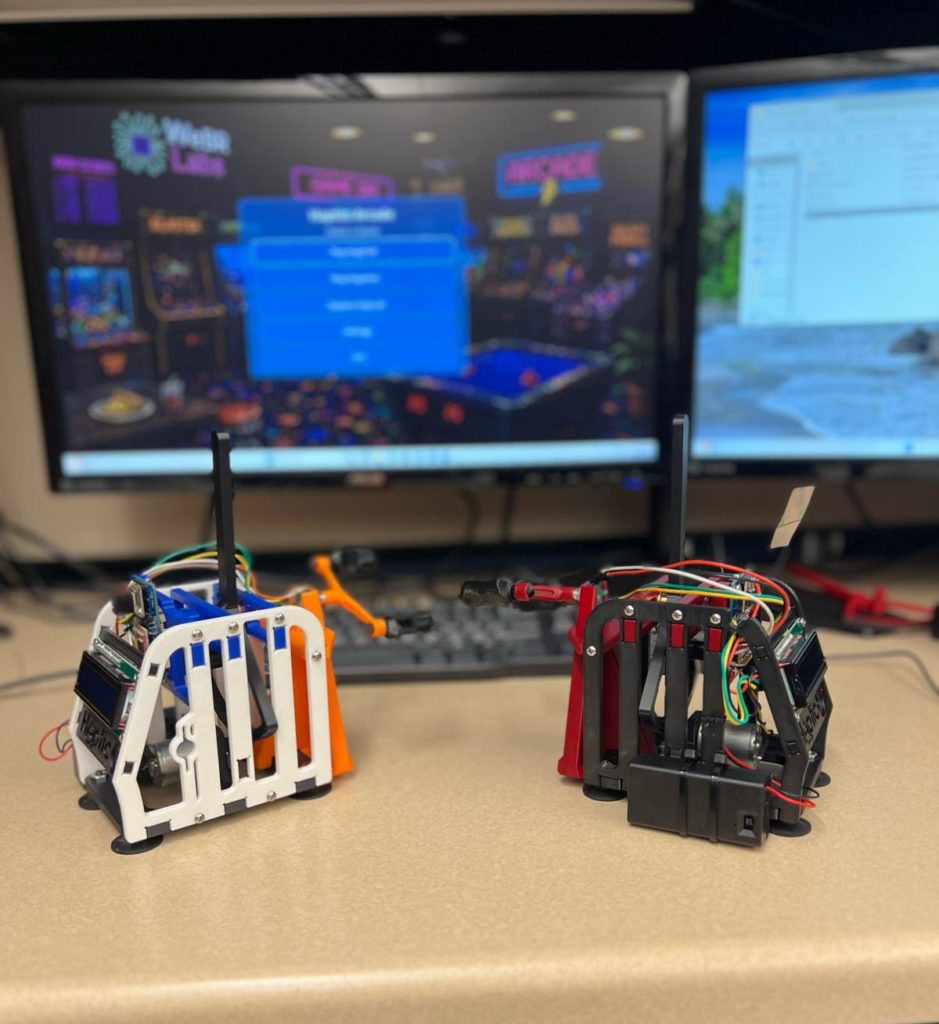
HAP FISH
- Developing low-cost hardware and software to promote educational uses of haptic paddle systems
- Working on deriving common haptic preferences and performance baselines for haptic systems, regardless of cost, using pre-built simulations and games