[et_pb_section fb_built=”1″ fullwidth=”on” disabled_on=”off|off|off” _builder_version=”4.16″ locked=”off” collapsed=”off” global_colors_info=”{}”][et_pb_fullwidth_image src=”https://ecm.eng.auburn.edu/wp/wp-content/uploads/2020/01/Wright_Crop1-1.jpg” admin_label=”Fullwidth Image” _builder_version=”4.16″ global_colors_info=”{}”][/et_pb_fullwidth_image][/et_pb_section][et_pb_section fb_built=”1″ _builder_version=”4.16″ global_colors_info=”{}”][et_pb_row _builder_version=”4.16″ global_colors_info=”{}”][et_pb_column type=”4_4″ _builder_version=”4.16″ global_colors_info=”{}”][et_pb_text _builder_version=”4.16″ hover_enabled=”0″ global_colors_info=”{}” sticky_enabled=”0″]
Keynote Speakers
[/et_pb_text][/et_pb_column][/et_pb_row][et_pb_row column_structure=”1_2,1_2″ _builder_version=”4.16″ global_colors_info=”{}” locked=”off”][et_pb_column type=”1_2″ _builder_version=”4.16″ global_colors_info=”{}”][et_pb_text _builder_version=”4.24.2″ hover_enabled=”0″ global_colors_info=”{}” sticky_enabled=”0″ admin_label=”Mosier”]
 Dr. Kathleen Mosier
San Francisco State University
[/et_pb_text][/et_pb_column][et_pb_column type=”1_2″ _builder_version=”4.16″ global_colors_info=”{}”][et_pb_text _builder_version=”4.24.2″ hover_enabled=”0″ global_colors_info=”{}” admin_label=”Prevot” sticky_enabled=”0″]
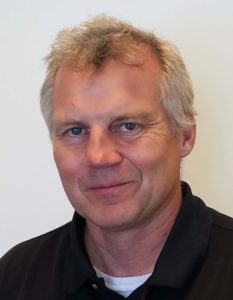 Tom Prevot
Joby Aviation
[/et_pb_text][/et_pb_column][/et_pb_row][et_pb_row column_structure=”1_2,1_2″ _builder_version=”4.16″ custom_margin=”8px||||false|false” global_colors_info=”{}” locked=”off”][et_pb_column type=”1_2″ _builder_version=”4.16″ global_colors_info=”{}”][et_pb_text admin_label=”Keynote” _builder_version=”4.16″ _module_preset=”default” custom_margin=”10px|0px|10px|0px|true|true” custom_padding=”10px|10px|10px|10px|true|true” hover_enabled=”0″ box_shadow_style=”preset1″ global_colors_info=”{}” sticky_enabled=”0″ disabled_on=”on|on|on” disabled=”on”]
Keynote
Thursday, May 20, 8:00 AM-9:00 AM
Title: Human-Collective Teams
Abstract: The science to support humans supervising highly autonomous heterogeneous robotic collectives continues to emerge. Developing effective human-collective teams requires focusing on all aspects of the integrated system development, the mission characteristics, and the real-world deployment domain. Very large numbers of simplistic individuals use biologically inspired algorithms to solve more complex problems. The size and complexity of these systems precludes a human’s ability to fully understand and communicate with each individual in the collective. Thus, transparency into the collective’s state and influencing its actions are a significant challenge that requires a close coupling with the underlying algorithms and the application domain characteristics. This presentation will discuss aspects of real-world deployments that impact the ability to provide transparency while also permitting the achievement of mission objectives.
[/et_pb_text][et_pb_text _builder_version=”4.24.2″ hover_enabled=”0″ locked=”off” global_colors_info=”{}” admin_label=”Bio Text” sticky_enabled=”0″]
Biography
Dr. Kathleen Mosier is an Emeritus Professor of Psychology from San Francisco State University, Past-President of the International Ergonomics Association, and the Founder and Principal Scientist of TeamScape LLC, a company for research on human teams and human-automation teams. Dr. Mosier received an MA in Psychology from San Jose State University, Ph.D. in I/O Psychology from University of California, Berkeley, and her training in aerospace human factors at NASA Ames Research Center. Dr. Mosier has been conducting research on expert teams, decision making, automation, and cognition for over 35 years. She and a collaborator introduced the term automation bias to describe errors resulting from the tendency of professional pilots and other decision makers to use automation as a heuristic replacement for vigilant decision processes. Current projects include NASA-funded research efforts to examine the impact of operational variables such as communication latency and crew autonomy in long-duration missions on remote (space-ground) teams in space operations.
[/et_pb_text][/et_pb_column][et_pb_column type=”1_2″ _builder_version=”4.16″ global_colors_info=”{}”][et_pb_text admin_label=”Keynote” _builder_version=”4.16″ _module_preset=”default” custom_margin=”10px|0px|10px|0px|true|true” custom_padding=”10px|10px|10px|10px|true|true” box_shadow_style=”preset1″ locked=”off” global_colors_info=”{}” disabled_on=”on|on|on” disabled=”on”]
Keynote
Wednesday, May 19, 8:00 AM-9:00 AM
Title: Neuroergonomics for Aviation
Abstract: The emerging field of research, known as Neuroergonomics, maintains that in order to investigate complex real-world behavior it is necessary to understand the processes within the context of the underlying interacting brain networks rather than under reduced isolated conditions that only occur in the laboratory. This discipline promotes the use of highly portable devices (eg. fNIRS, EEG) to determine the neural correlates of perceptual, motor, and cognitive processing in highly ecological environments. Aviation operations constitute an ideal paradigm to implement this approach. The objective of this talk is to present recent advances in Neuroergonomic research addressing pilot’s failure of attention, decision making and social interactions as well as the design of cognitive countermeasures. We will also discuss the challenges of implementing neuroadaptive technology in the cockpit for safer operations.
[/et_pb_text][et_pb_text _builder_version=”4.24.2″ hover_enabled=”0″ locked=”off” global_colors_info=”{}” admin_label=”Bio Text” sticky_enabled=”0″]
Biography
Tom Prevot is the air taxi product lead at Joby Aviation. He and his team are building the operational tooling and customer facing apps for Joby’s air taxi service. Tom’s goal is to help make flying in electric vertical takeoff and landing aircraft across cities around the world an everyday reality. Prior to joining Joby Tom was Director of Engineering for airspace systems at Uber Elevate. Before joining Elevate in 2017 Tom spent twenty years at NASA Ames Research Center investigating novel air traffic concepts and technologies as well as human/automation interaction in aviation. He earned his doctorate in aerospace engineering from the Munich University of the German Armed Forces.
[/et_pb_text][/et_pb_column][/et_pb_row][et_pb_row column_structure=”1_2,1_2″ _builder_version=”4.16″ global_colors_info=”{}” disabled_on=”on|on|on” disabled=”on”][et_pb_column type=”1_2″ _builder_version=”4.16″ global_colors_info=”{}”][et_pb_text _builder_version=”4.16″ hover_enabled=”0″ global_colors_info=”{}” sticky_enabled=”0″ admin_label=”OLD”]
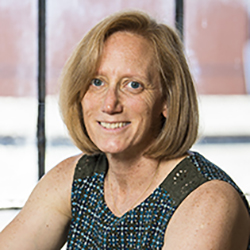 Dr. Julie A. Adams
Oregon State University
[/et_pb_text][/et_pb_column][et_pb_column type=”1_2″ _builder_version=”4.16″ global_colors_info=”{}”][et_pb_text _builder_version=”4.16″ global_colors_info=”{}” admin_label=”OLD”]
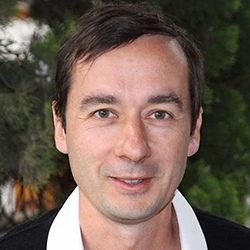 Frédéric Dehais, Ph.D.
Université Fédérale de Toulouse
[/et_pb_text][/et_pb_column][/et_pb_row][et_pb_row column_structure=”1_2,1_2″ _builder_version=”4.16″ custom_margin=”8px||||false|false” global_colors_info=”{}” disabled_on=”on|on|on” disabled=”on”][et_pb_column type=”1_2″ _builder_version=”4.16″ global_colors_info=”{}”][et_pb_text admin_label=”OLD Keynote” _builder_version=”4.16″ _module_preset=”default” custom_margin=”10px|0px|10px|0px|true|true” custom_padding=”10px|10px|10px|10px|true|true” box_shadow_style=”preset1″ global_colors_info=”{}”]
Keynote
Thursday, May 20, 8:00 AM-9:00 AM
Title: Human-Collective Teams
Abstract: The science to support humans supervising highly autonomous heterogeneous robotic collectives continues to emerge. Developing effective human-collective teams requires focusing on all aspects of the integrated system development, the mission characteristics, and the real-world deployment domain. Very large numbers of simplistic individuals use biologically inspired algorithms to solve more complex problems. The size and complexity of these systems precludes a human’s ability to fully understand and communicate with each individual in the collective. Thus, transparency into the collective’s state and influencing its actions are a significant challenge that requires a close coupling with the underlying algorithms and the application domain characteristics. This presentation will discuss aspects of real-world deployments that impact the ability to provide transparency while also permitting the achievement of mission objectives.
[/et_pb_text][et_pb_text _builder_version=”4.16″ locked=”off” global_colors_info=”{}” admin_label=”OLD Text”]
Associate Director of Research
Collaborative Robotics and Intelligent Systems Institute
Professor, Computer Science
School of Electrical Engineering and Computer Science
Professor, Mechanical Engineering and Industrial Engineering (courtesy)
School of Mechanical, Industrial and Manufacturing Engineering
Webpage: http://research.engr.oregonstate.edu/hmtl/
Education
- Ph.D., Computer and Information Systems, University of Pennsylvania, 1995
- M.S.E., Computer and Information Systems, University of Pennsylvania, 1993
- B.B.A., Accounting, Siena College, 1990
- B.S., Computer Science, Siena College, 1989
Biography
Julie A. Adams is the Associate Director of Research in the Collaborative Robotics and Intelligent Systems Institute, Professor of Computer Science in the School of Electrical Engineering and Computer Science, and Professor (courtesy) of Mechanical and Industrial Engineering in the School of Mechanical, Industrial and Manufacturing Engineering at Oregon State University. She was the founder of the Human-Machine Teaming Laboratory at Vanderbilt University, prior to moving the laboratory to Oregon State. Adams has worked in the area of human-machine teaming for over twenty-five years. Throughout her career she has focused on human interaction with unmanned systems, but also focused on manned civilian and military aircraft at Honeywell, Inc. and commercial, consumer and industrial systems at the Eastman Kodak Company. Adams received her M.S. and Ph.D. degrees in Computer and Information Sciences from the University of Pennsylvania and her B.S. in Computer Science and B.B.E. in Accounting from Siena College.
Adams’ research efforts have been featured in international news outlets, including National Geographic, Scientific American Podcast, Der Spiegel, and BBC online. Adams was the recipient of the NSF CAREER Award and was selected for the DARPA Computer Science Study Panel. She is a contributor to the National Academies report on Mainstreaming UUVs into the fleet for the CNO and to an Army BAST requested report on counter measures for UAVs. Adams is also the Oregon State University primary investigator to the FAA Center of Excellence for Unmanned Aerial Systems Research Alliance for System Safety of UAS through Research Excellence (ASSURE).
Research Group(s)
Collaborative Robotics and Intelligent Systems (CoRIS) Institute
Human Machine Teaming Laboratory
[/et_pb_text][/et_pb_column][et_pb_column type=”1_2″ _builder_version=”4.16″ global_colors_info=”{}”][et_pb_text admin_label=”OLD Keynote” _builder_version=”4.16″ _module_preset=”default” custom_margin=”10px|0px|10px|0px|true|true” custom_padding=”10px|10px|10px|10px|true|true” box_shadow_style=”preset1″ locked=”off” global_colors_info=”{}”]
Keynote
Wednesday, May 19, 8:00 AM-9:00 AM
Title: Neuroergonomics for Aviation
Abstract: The emerging field of research, known as Neuroergonomics, maintains that in order to investigate complex real-world behavior it is necessary to understand the processes within the context of the underlying interacting brain networks rather than under reduced isolated conditions that only occur in the laboratory. This discipline promotes the use of highly portable devices (eg. fNIRS, EEG) to determine the neural correlates of perceptual, motor, and cognitive processing in highly ecological environments. Aviation operations constitute an ideal paradigm to implement this approach. The objective of this talk is to present recent advances in Neuroergonomic research addressing pilot’s failure of attention, decision making and social interactions as well as the design of cognitive countermeasures. We will also discuss the challenges of implementing neuroadaptive technology in the cockpit for safer operations.
[/et_pb_text][et_pb_text _builder_version=”4.16″ locked=”off” global_colors_info=”{}” admin_label=”OLD Text”]
Professor
Institut Supérieur de l’Aéronautique et de l’Espace (ISAE)-SUPAERO
Webpage: https://drexel.edu/biomed/faculty/affiliated/DehaisFrederic/
Education
- Post Doctorate, ISAE-SUPAERO, Toulouse (France), Neuroergonomics, 2004-2006
- Ph.D., ONERA, Toulouse (France), Cognitive Science, 2000-2004
- M.S., Universite Bordeaux 2, Bordeaux (France), Cognitive Science, 1999-2000
- M.S., Universite Toulouse le Mirail, Toulouse (France), Human Factors, 1998-1999
- B.A., Universite Bordeaux 2, Bordeaux. (France), Biology/Physiology, 1994-1998
Biography
Dr. Frédéric Dehais is a full professor at ISAE since 2011 and holder of the AXA chair “Neuroergonomics for flight safety” (20 years https://www.axa-research.org/project/fredericdehais), a rare credit attributed to less than thirty researchers in the world. He is leading the Human Factors and Neuroergonomics Departement, a team composed of 18 permanent and non-permanent members with an interdisciplinary expertise in Neuroscience, Signal Processing, Computer Science, and Human Factors. His research deals with understanding of the neural correlates of human error in real-life situations and the implementation of real-time solutions to mitigate human error. His research has been published in international journals such as Neuroimage, Human Brain Mapping, Behavioral Brain Research, IEEE, Plos One, Human Factors. His innovative work has also led to four international patents that are currently implemented in modern civilian aircrafts. He is he co-founder of the European 2f-NIRS conference with Dr. Stéphane Perrey and the International Neuroergonomics conference with Dr. Hasan Ayaz.
He defended his Ph.D. in 2004 at ONERA (Office National d’Etude et de Recherche Aeronautique) on the topic of modeling cognitive conflict in pilots’ activity. He held a 2-year postdoctoral position funded by Airbus applying the research developed during his Ph.D. Since 2006, he has been leading the Human Factors and Neuroergonomics team at ISAE, which works on academic and industrial projects for providing real-time assistance to human operators.
Professor Dehais was co-chair of the first International Neuroergonomics Conference, held in Paris, France in 2016. Neuroergonomics is an emerging scientific field that applies neuroscience to study performance. Its aim is to look at human skill and brain function in order to design systems for safer and more efficient operation.
Research Group(s)
Neuroergonomie et facteurs humains (DCAS)
[/et_pb_text][/et_pb_column][/et_pb_row][/et_pb_section]