Another year, another representation of WeBR Lab at MECC 2026.

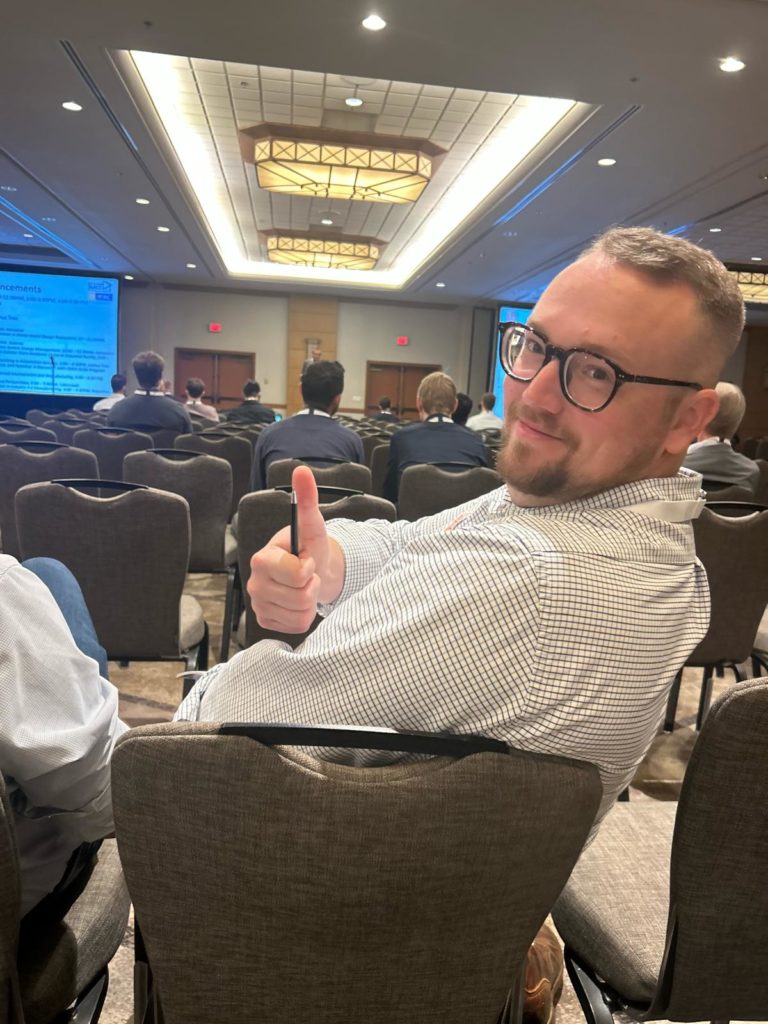
Once again, the WeBR Lab took the stage at the sixth edition of the Modeling, Estimation and Control Conference (MECC 2026), hosted in Phoenix, Arizona.

Representing the team were Zack Miller, freshly embarking on his Ph.D. journey; Dr. Rhet O. Hailey, a former student but always a member of the WeBR family; and, alongside them, our beloved and respected advisor, Dr. Chad G. Rose.
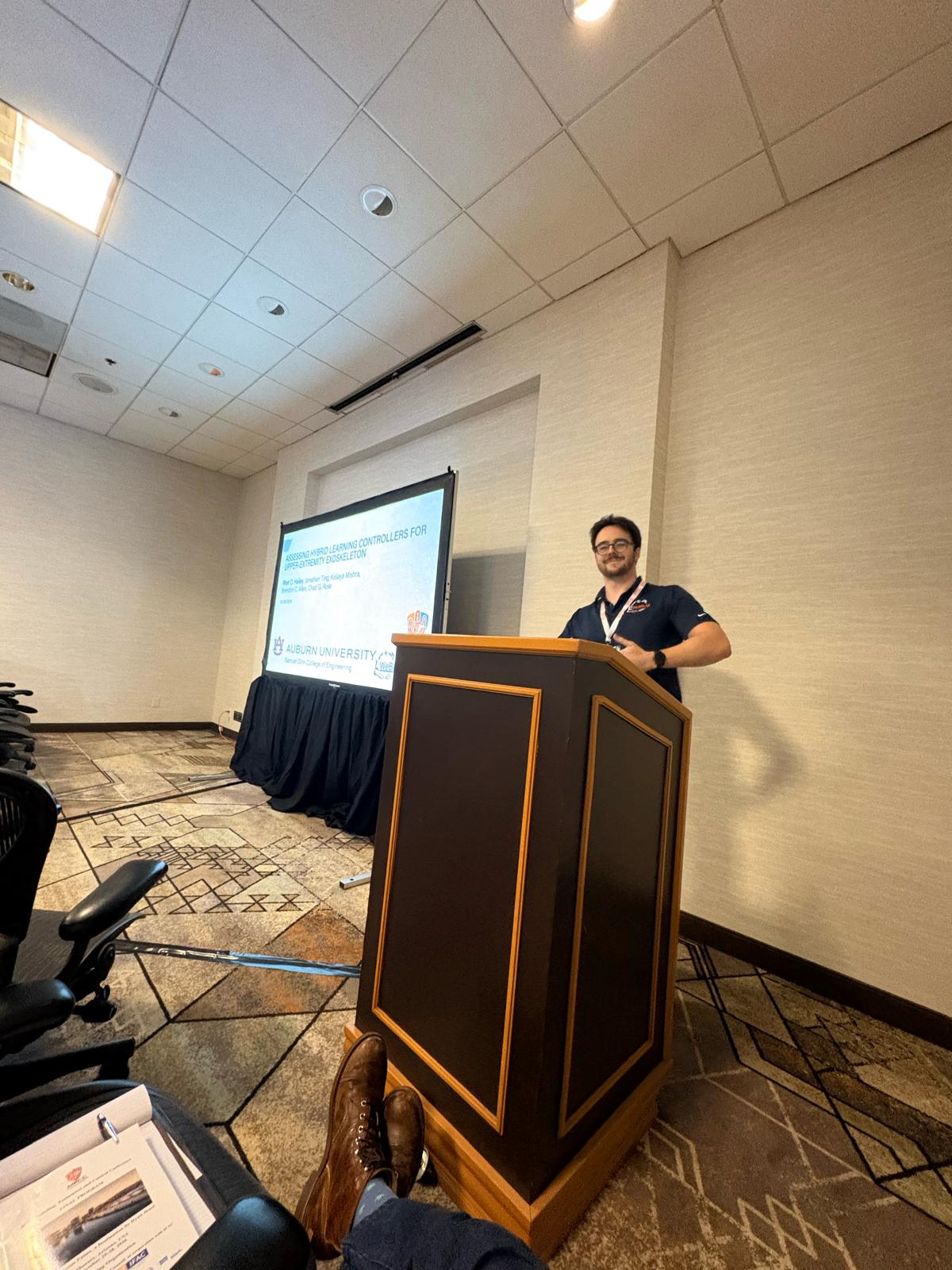
Rhet O. Hailey: Assessing Hybrid Learning Controllers for Upper-Extremity Exoskeleton

Combining robotic exoskeleton control with functional electrical stimulation offers promising opportunities for rehabilitation following neurological injuries. However, the complexity of these systems presents significant control challenges. Rhet’s research explores the implementation of real-time neural network-based controllers to compensate for model uncertainties while improving movement quality.

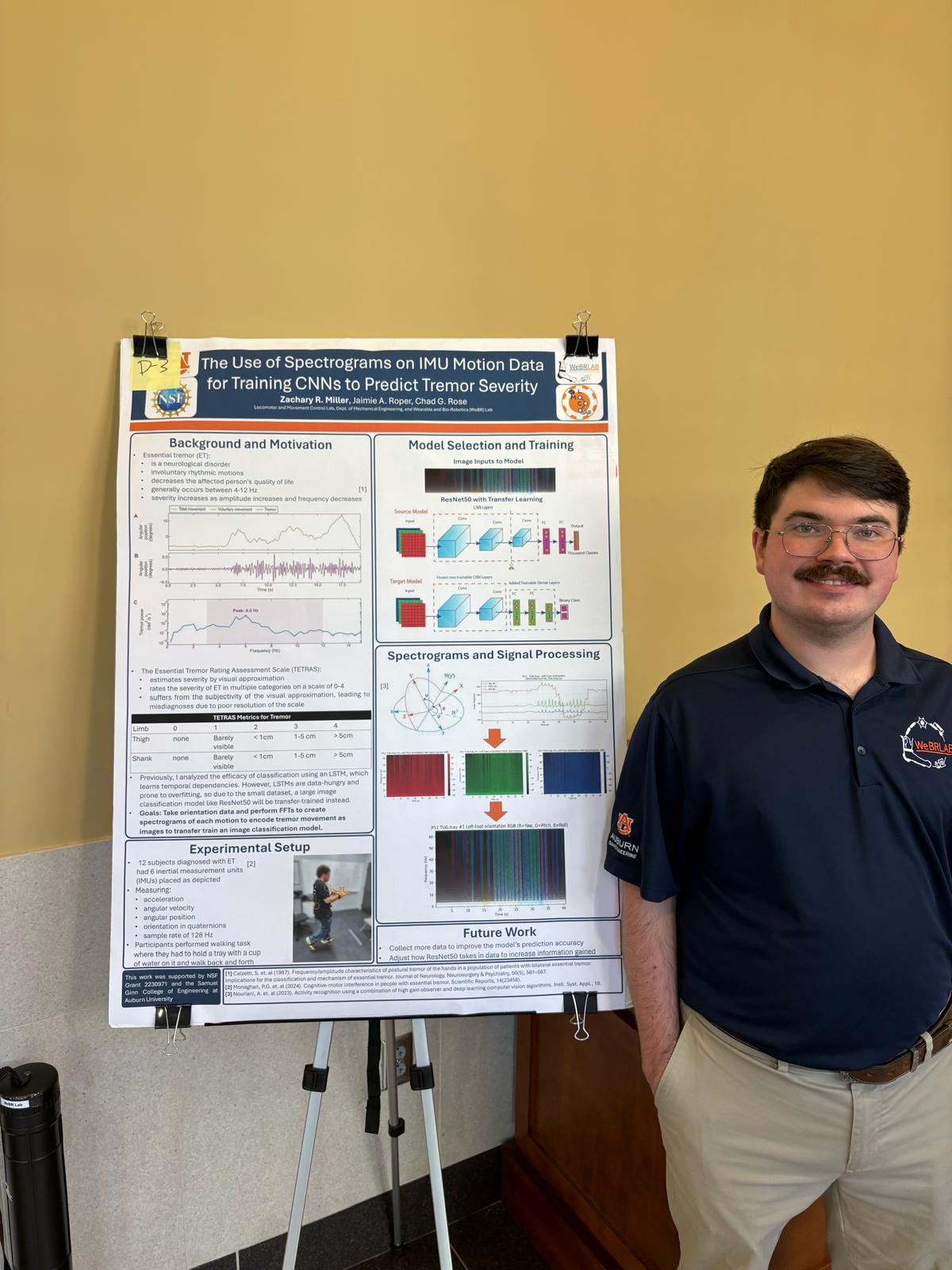
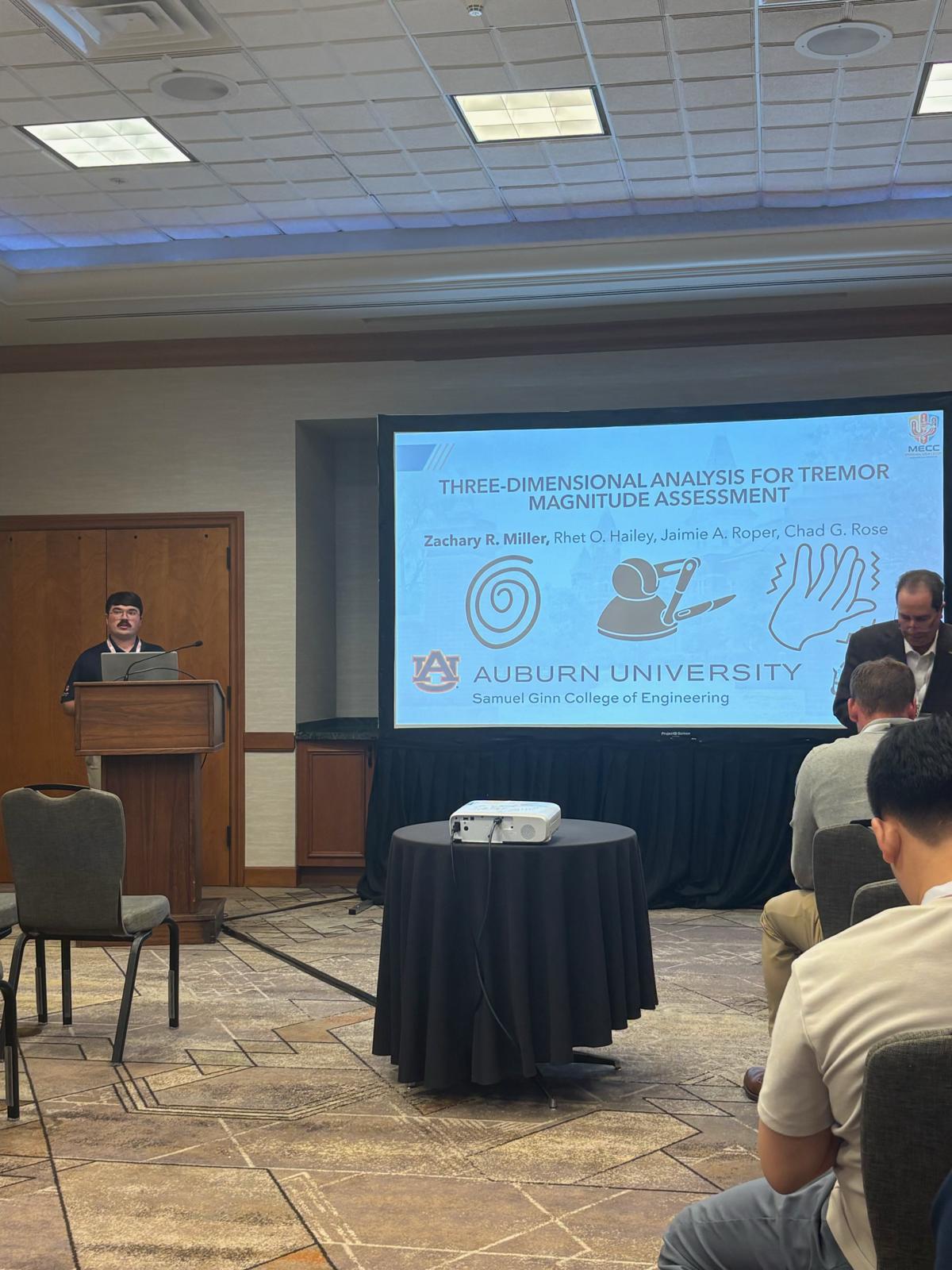
Zachary Miller: Three-Dimensional Analysis for Tremor Magnitude Assessment

Traditional tremor assessments often rely on handwriting and spiral-drawing tasks performed on rigid surfaces, potentially masking underlying tremor characteristics. Zack’s research investigates an alternative approach using haptic interfaces to evaluate tremor severity in three-dimensional space under different surface impedance conditions.

Beyond the presentations, MECC continues to be a valuable opportunity to exchange ideas, reconnect with fellow researchers, and explore new perspectives in modeling, control, and human-centered robotics.

Congratulations to the team, and until the next MECC!

War Eagle!
WeBR Lab at the 2026 Annual Graduate Student Poster Session and Contest

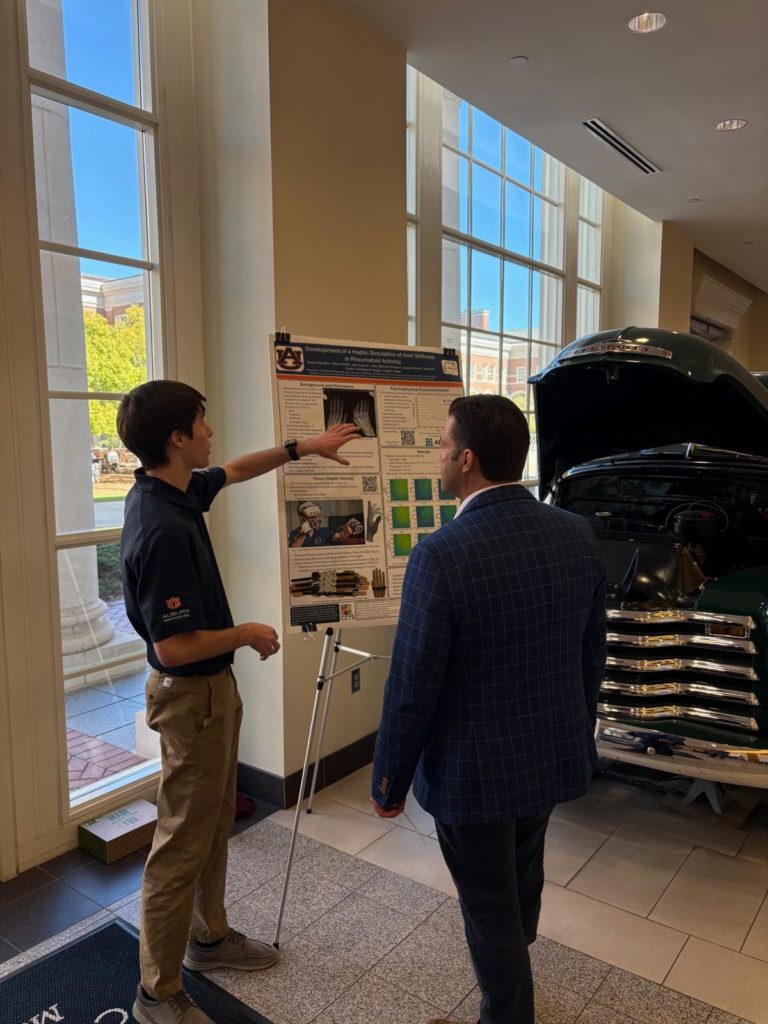
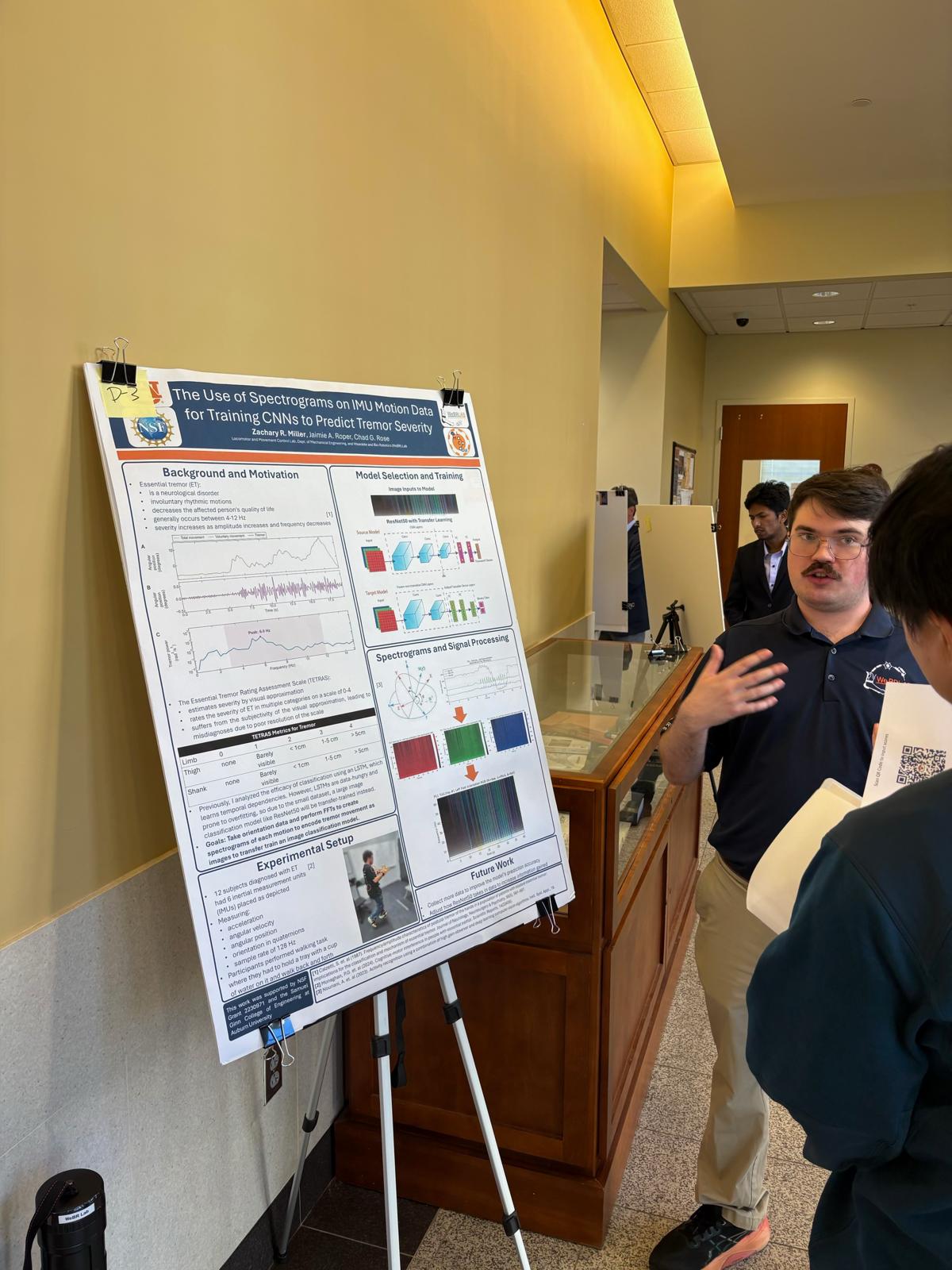
As part of its annual tradition, Auburn University’s Department of Mechanical Engineering hosted its Annual Graduate Student Poster Session and Contest on October 23, 2026. And, as always, the WeBR Lab had something remarkable to share.

Bringing together experience and fresh perspectives, our team members Paxton Albright, Zack Miller, Mason Mathias, and Carlos Campos proudly represented the lab in the Design and Manufacturing and Human Systems, Biomechanics, and Rehabilitation categories.

The results speak for themselves:

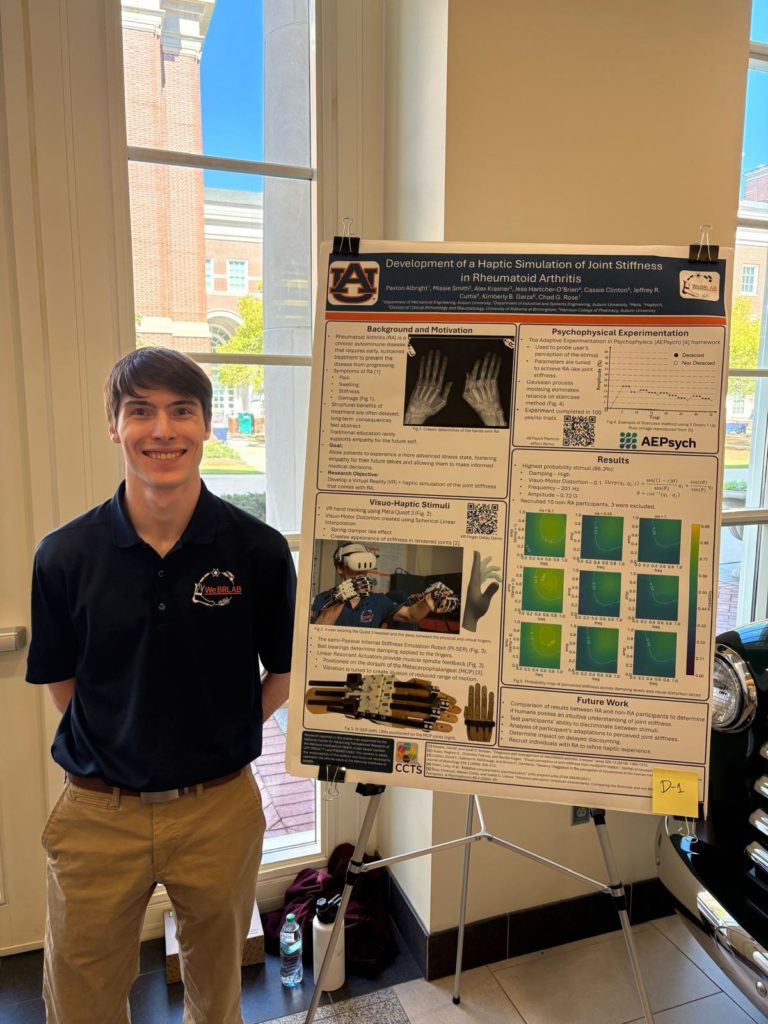
Paxton Albright – 1st Place
Human Systems, Biomechanics, and Rehabilitation
Development of a Haptic Simulation of Joint Stiffness in Rheumatoid Arthritis

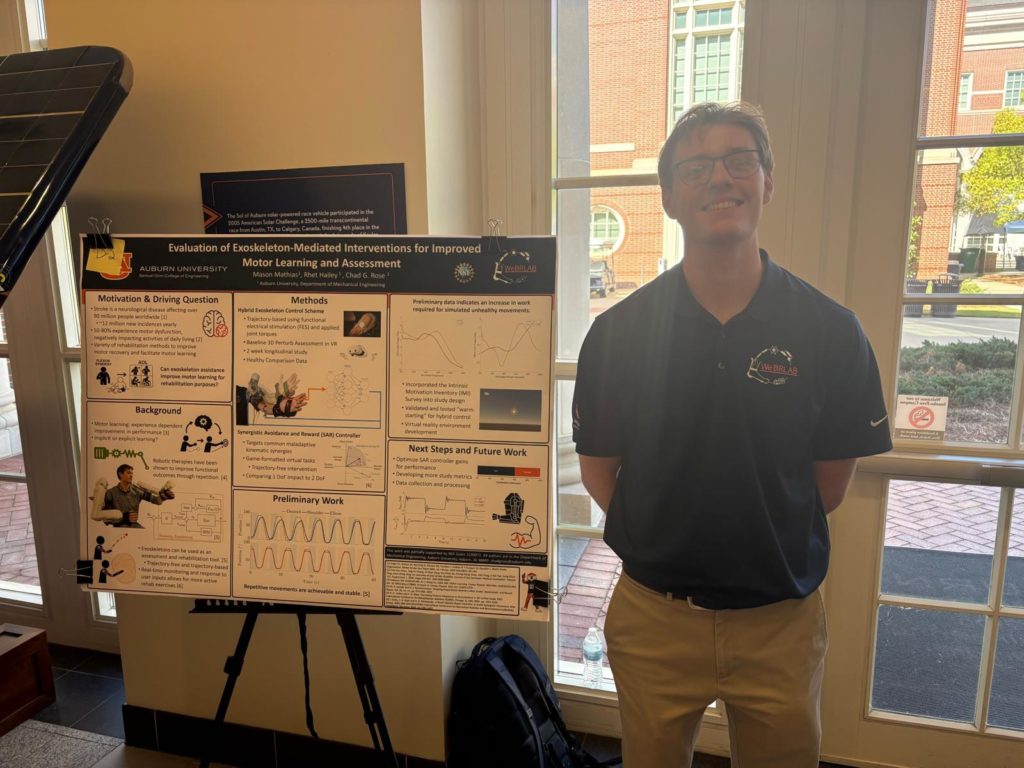
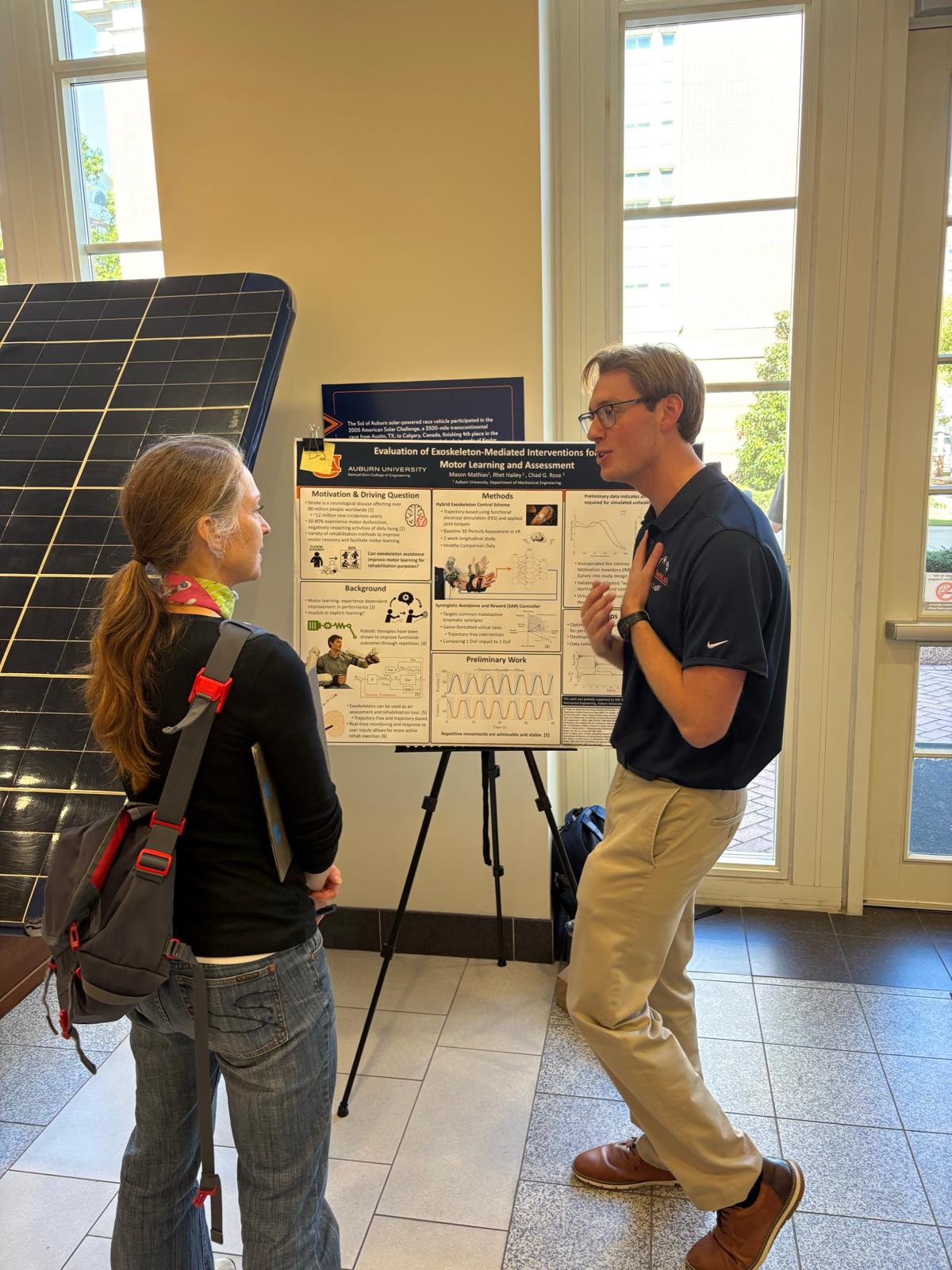
Mason Mathias – 2nd Place
Human Systems, Biomechanics, and Rehabilitation
Evaluation of Exoskeleton Intervention Strategies for Improved Motor Learning and Assessment

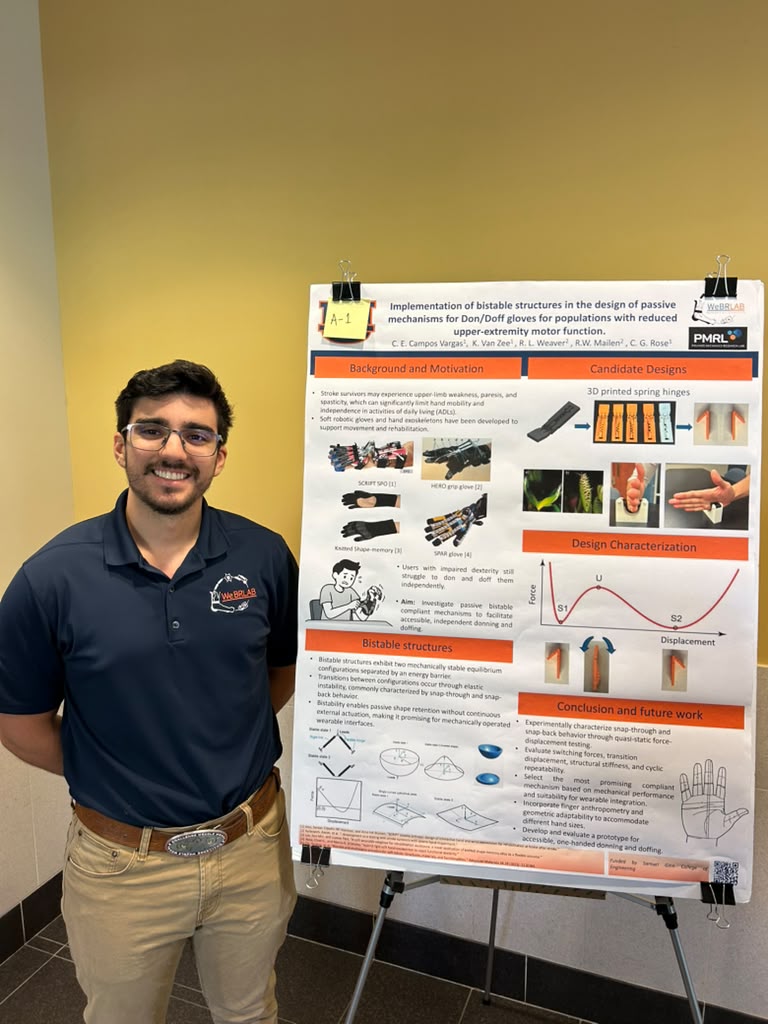
Carlos E. Campos Vargas – 3rd Place
Design and Manufacturing
Implementation of Bistable Structures in the Design of Passive Mechanisms for Don/Doff Gloves for Populations with Reduced Upper-Extremity Motor Function

Three podium finishes, two research categories, and one team driven by the pursuit of innovation in wearable robotics.

I am proud of my team!

Chad Rose

Beyond the awards, these events provide an opportunity to share our progress, exchange ideas, and learn from fellow researchers across the department.

Congratulations to all our participating members for their hard work and dedication. Let’s keep building, innovating, and pushing boundaries!

War Eagle!
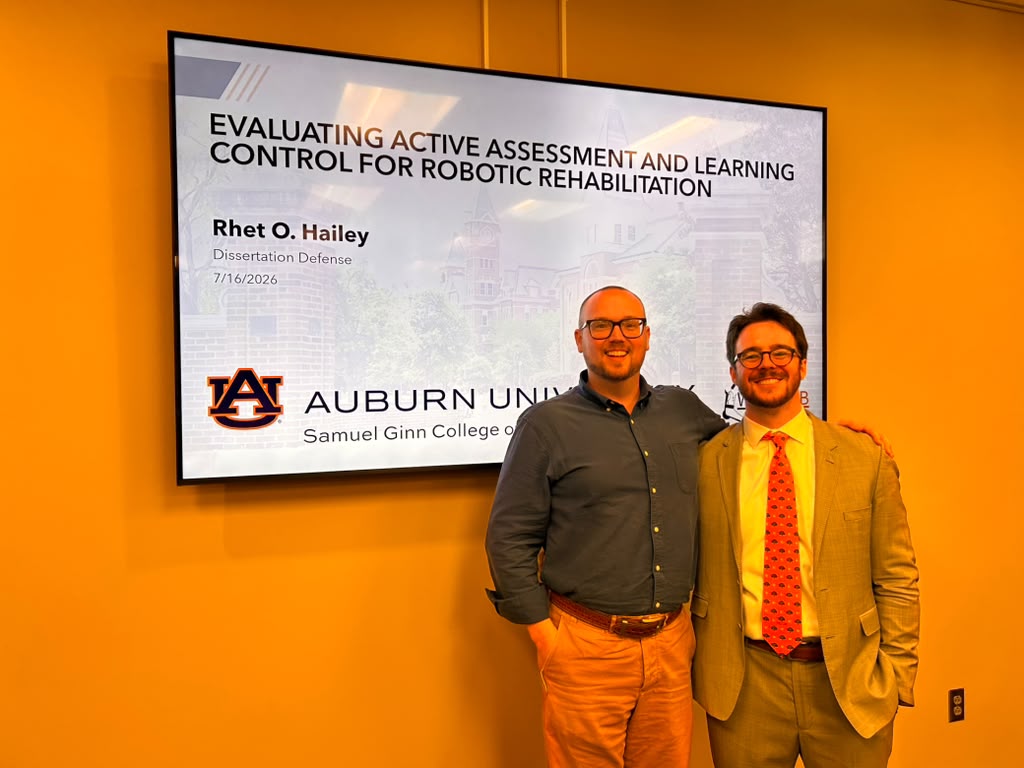
Congratulations! It’s a PhD!

A vision defended. A mission accomplished.

Dr. Rhet O. Hailey has successfully defended his PhD, culminating years of dedication and innovation. His research, “Evaluating Active Assessment and Learning Control for Robotic Rehabilitation,” advances the future of upper-limb robotic rehabilitation and stands as a meaningful contribution to mechanical and biomedical engineering. Congratulations, Dr. Hailey!

From the very beginning, Rhet has been more than a researcher, he has been a cornerstone of the WeBR Lab. As one of our founding members, his leadership, persistence, and willingness to mentor others helped shape the culture and identity of the lab. His impact will continue long after today.

To our lab’s big brother: thank you. This isn’t goodbye it’s the start of a new chapter. We know your journey is just beginning, and we can’t wait to see the lives you’ll impact next.

Best of luck, Dr. Hailey!

-CC

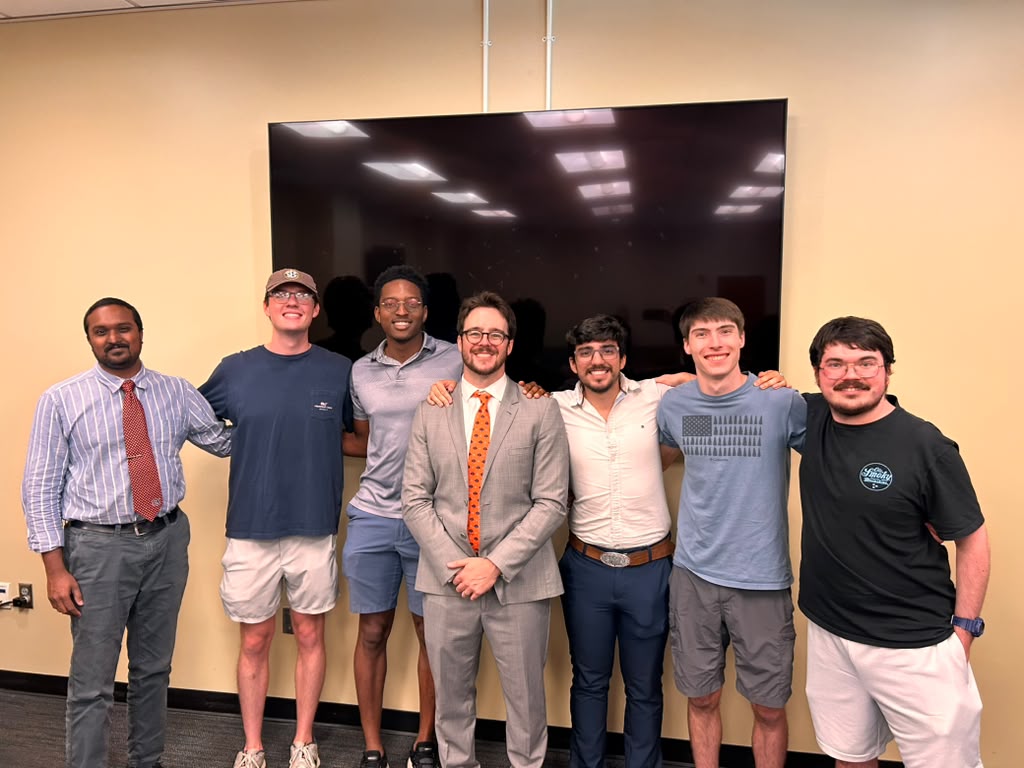
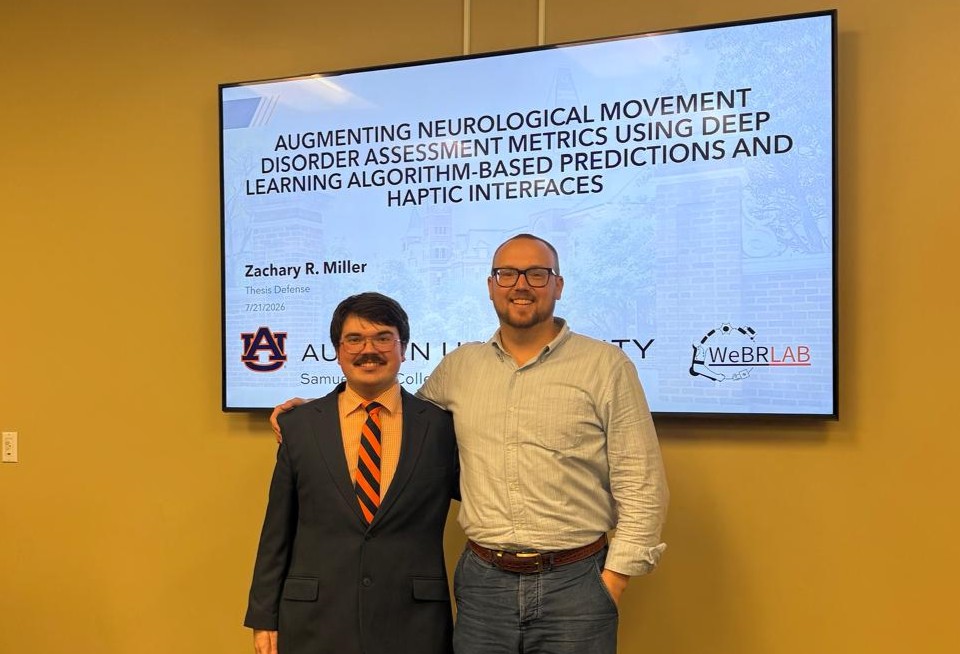
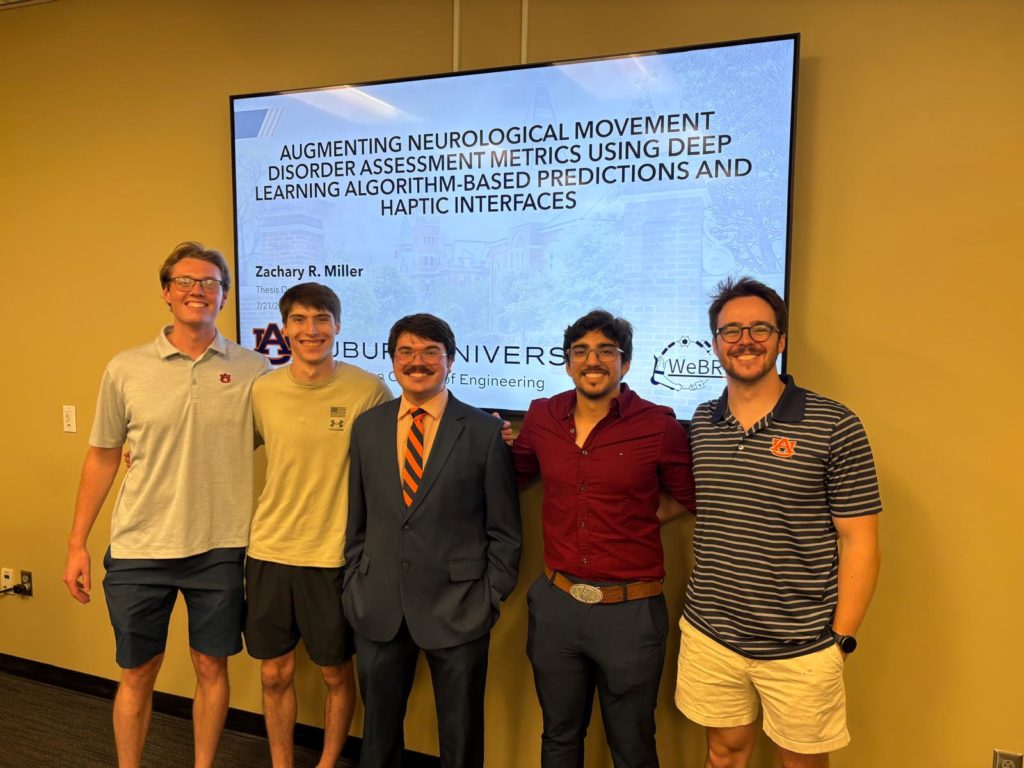
Successful Thesis Defense: Zachary Miller

Shaking and shivering may define the movement disorders Zack studies, but they certainly didn’t shake him.

Zachary Miller has successfully defended his master’s thesis, “Augmenting Neurological Movement Disorder Assessment Metrics Using Deep Learning Algorithm-Based Predictions and Haptic Interfaces.” Through the integration of artificial intelligence and haptic technologies, his research contributes to advancing the assessment of neurological movement disorders and the future of rehabilitation engineering.

With his master’s journey complete, Zack is already looking ahead to the next challenge as he continues into his Ph.D. We’re excited to watch this next chapter unfold and see the impact his research will have.

Congratulations, Zack! The WeBR Lab is proud of this milestone, and we’ll be cheering you on every step of the way.

-CC

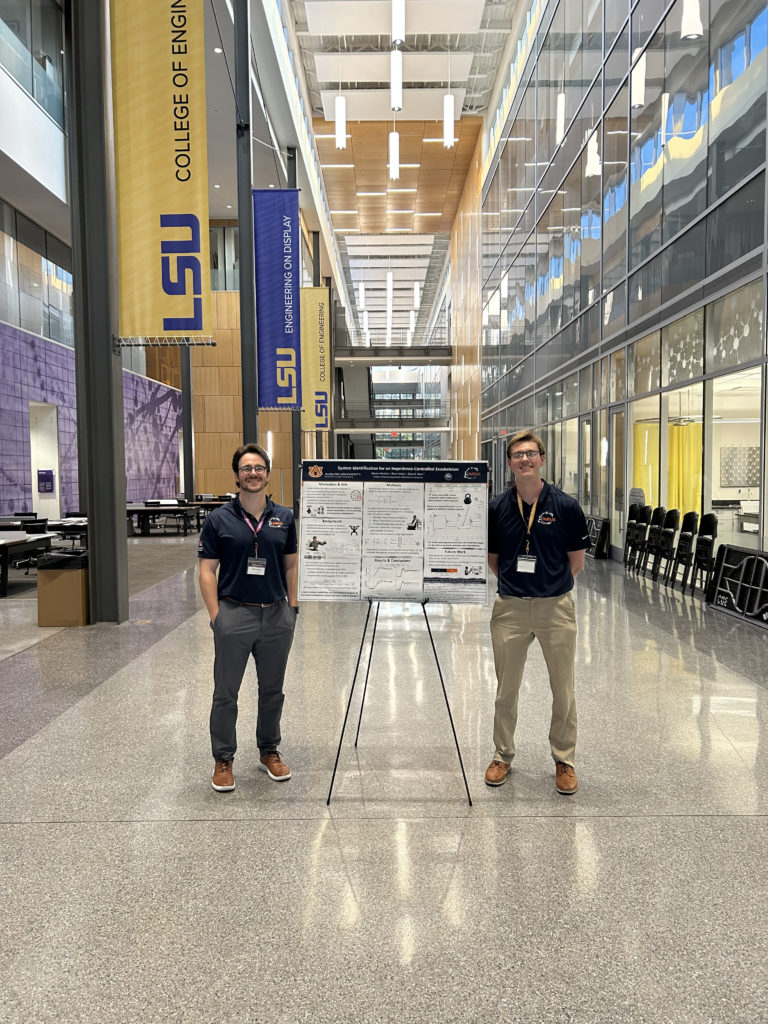
WeBR presents at the LSU Symposium on Control, Learning, and Intelligent Systems

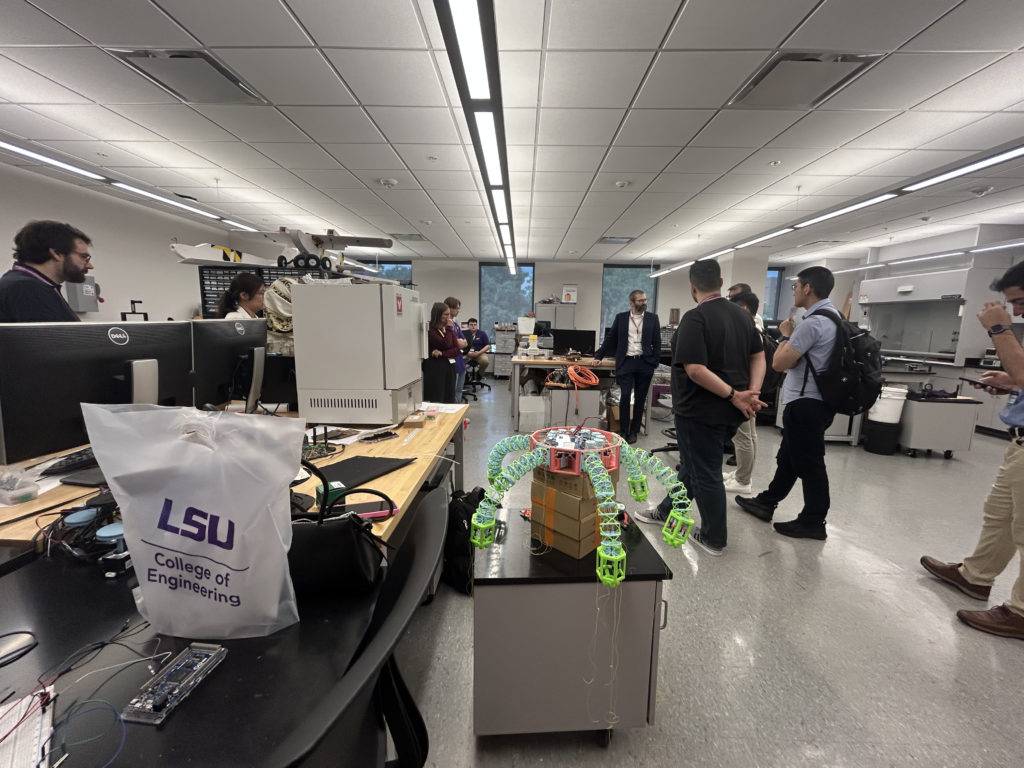
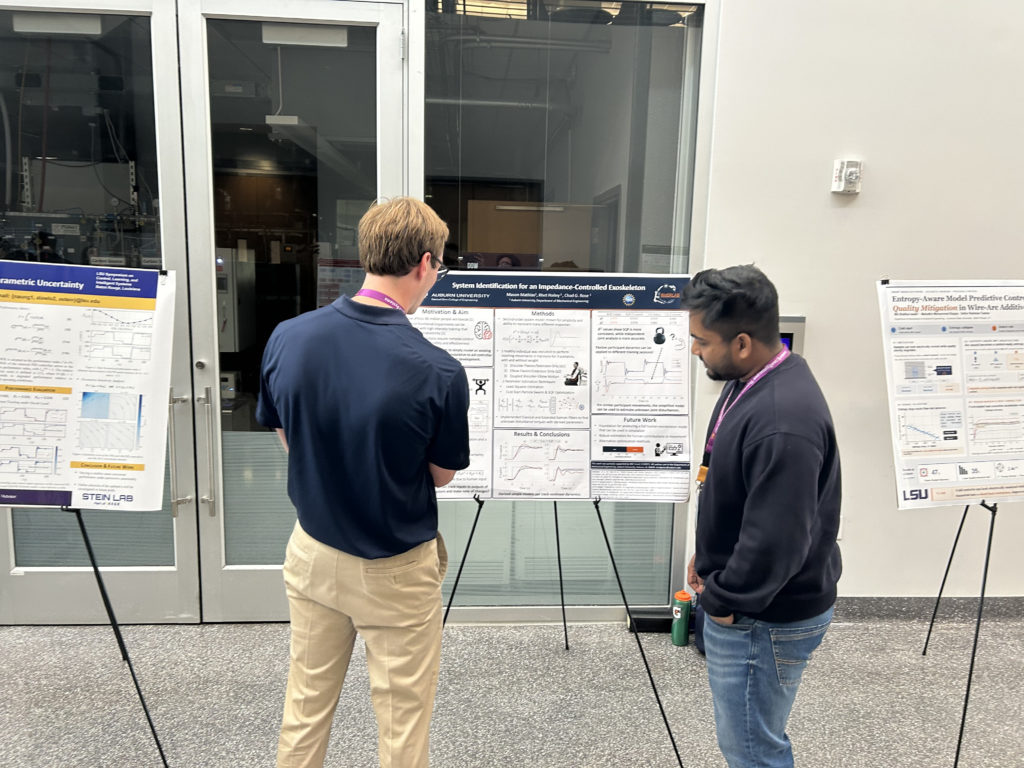
Collaboration, innovation, and meaningful discussion were at the forefront as members of the WeBR Lab attended the LSU Symposium on Control, Learning, and Intelligent Systems.

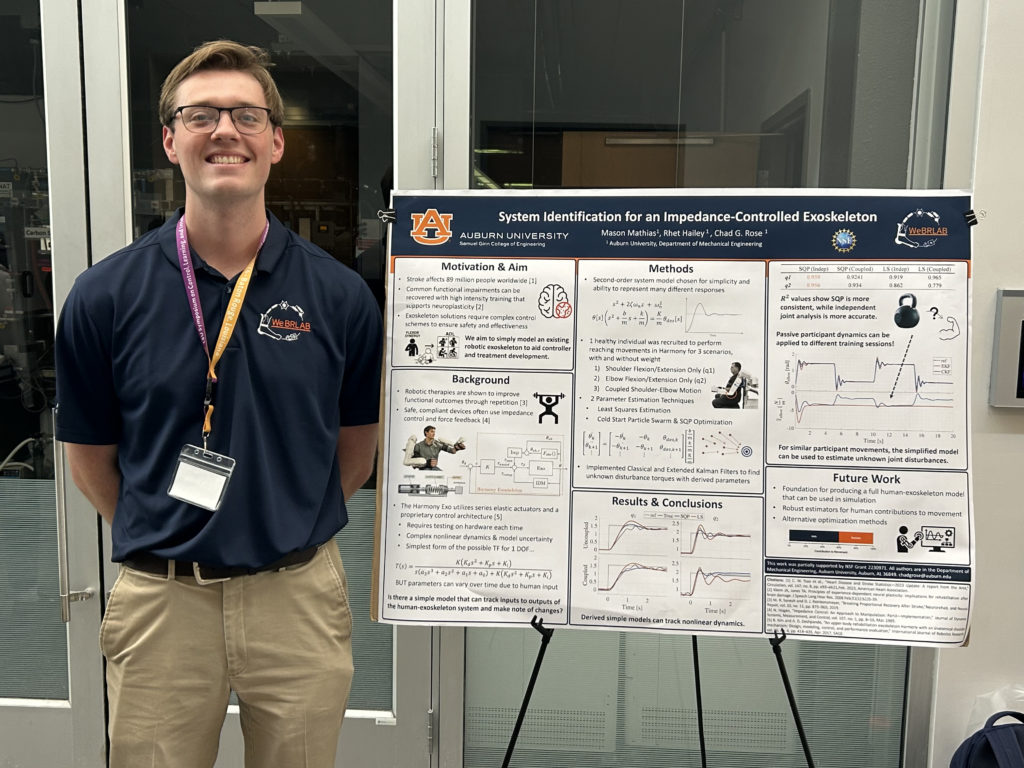
Representing the WeBR Lab, Mason D. Mathias and Rhet O. Hailey presented their research titled “System Identification for an Impedance-Controlled Exoskeleton.” Utilizing the Harmony exoskeleton platform, their work focuses on developing simplified dynamic models of robotic exoskeleton systems designed to assist individuals affected by stroke. By improving the understanding of system behavior, this research aims to support the development of more effective control strategies and rehabilitation treatments, ultimately helping advance wearable robotic technologies for clinical applications.

WeBR Lab is proud of Mason and Rhet for representing the lab and contributing to the growing conversation surrounding intelligent systems and wearable robotic technologies. We look forward to seeing how these interactions and collaborations continue to shape future research and innovation.

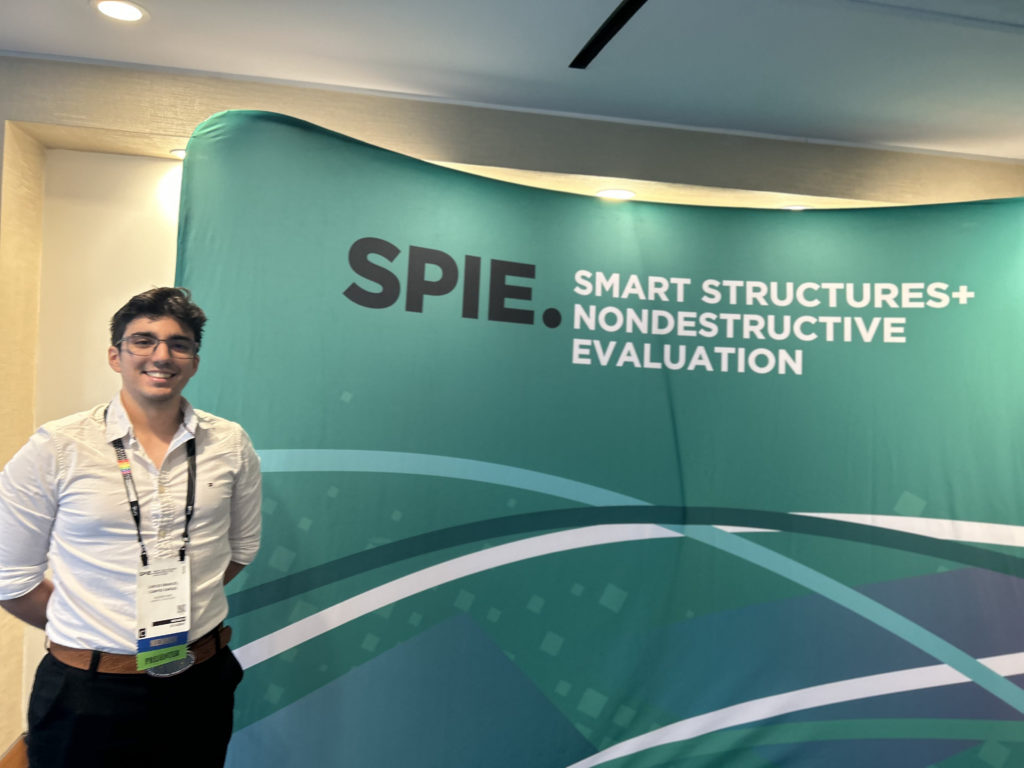
WeBR Lab Research Presented at SPIE Smart Structures + Nondestructive Evaluation 2026

WeBR Lab proudly participated in the SPIE Smart Structures + Nondestructive Evaluation Conference for the first time, bringing together researchers and innovators from around the world working on advanced materials, sensing technologies, robotics, and intelligent systems.

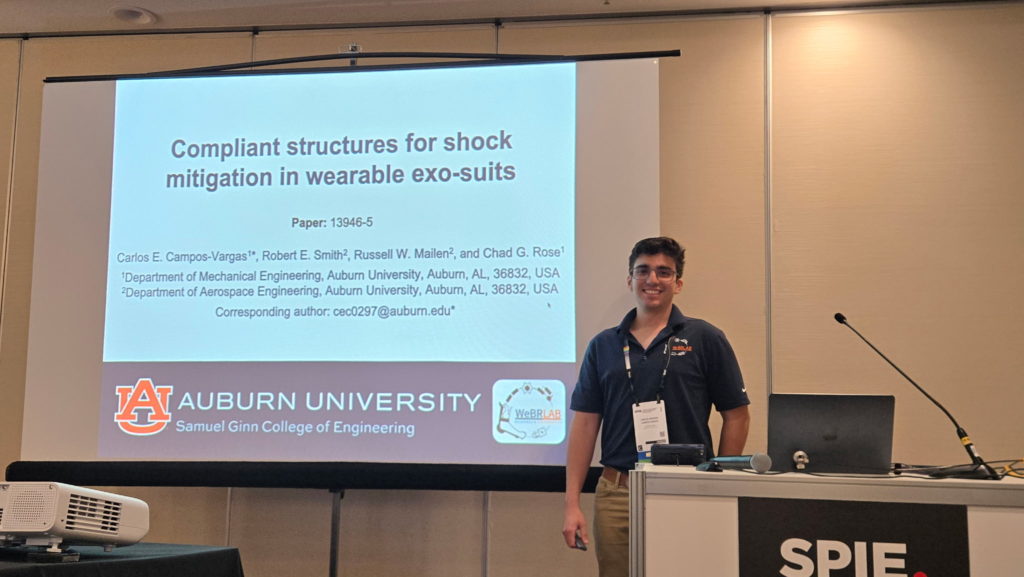
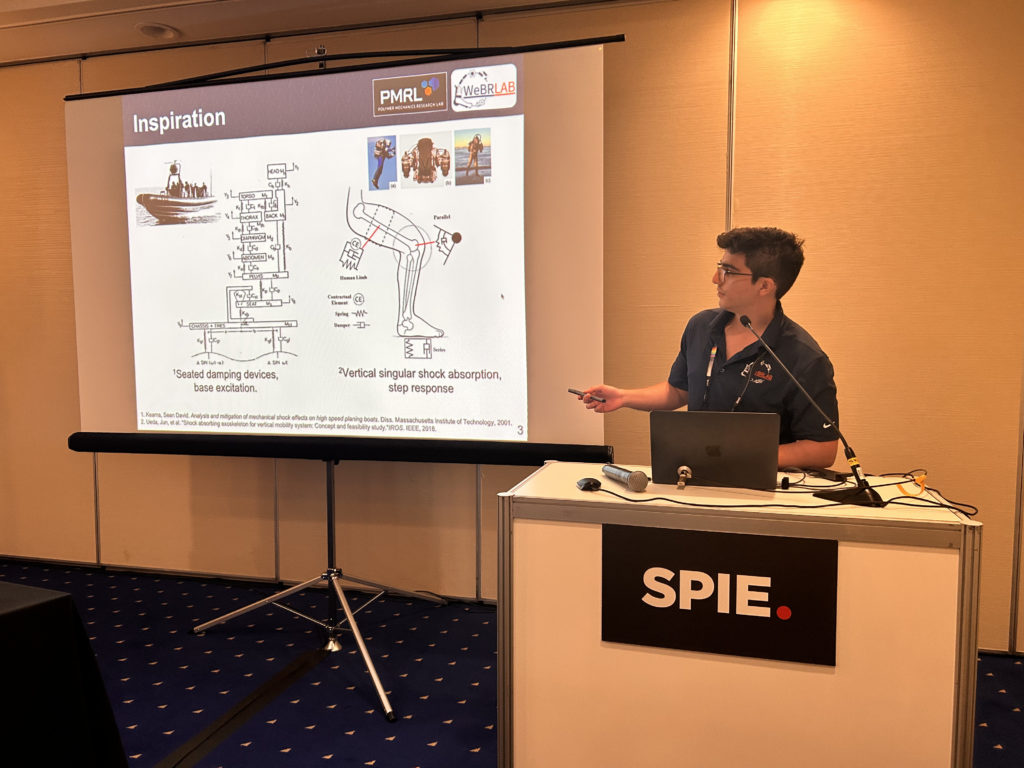
The presented project, titled “Compliant Structures for Shock Mitigation in Wearable Exosuits,” focuses on the design, development, and characterization of a passive wearable device intended to reduce impact transmission through the lower limbs during high-speed craft (HSC) operations.

First-year Mechanical Engineering master’s student Carlos E. Campos Vargas, under Dr. Chad G. Rose’s guidance, represented the lab. During the conference, Carlos worked with the Polymers Mechanics Research Lab team, which included Dr. Russell W. Mailen and Robert E. Smith from Auburn Aerospace Engineering, showcasing the interdisciplinary scope of current engineering research.

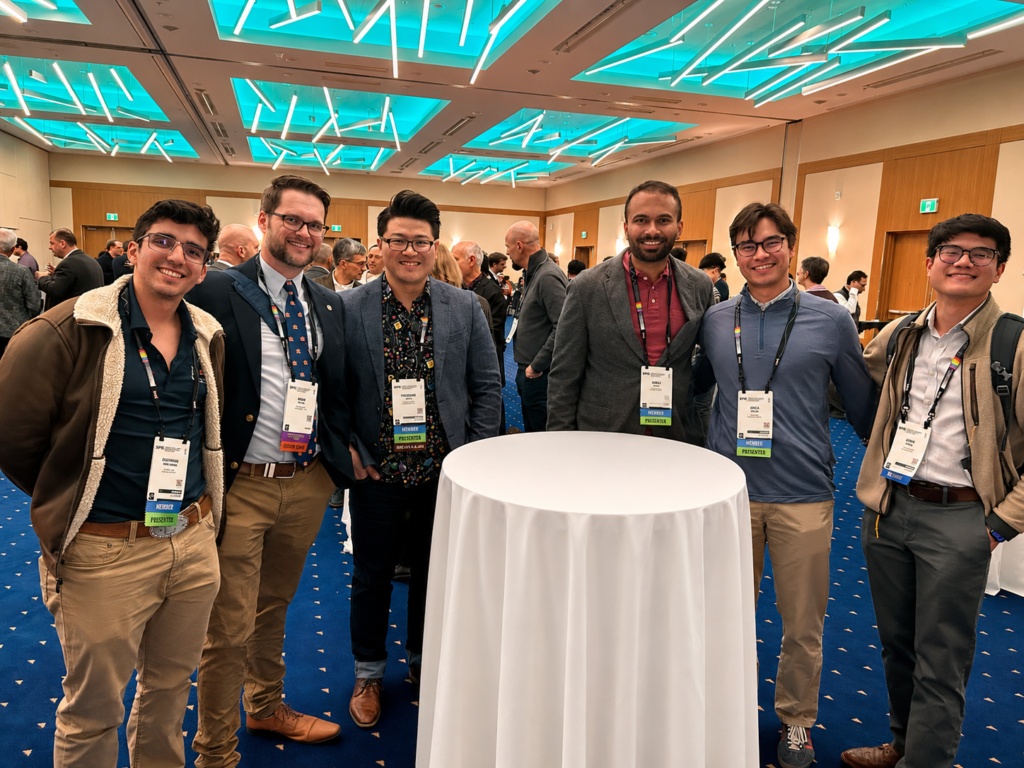
The conference offered a great chance to network, share ideas, and discuss ongoing progress with researchers from various disciplines and institutions around the world.

Celebrating Excellence at Auburn’s Graduate Award Ceremony

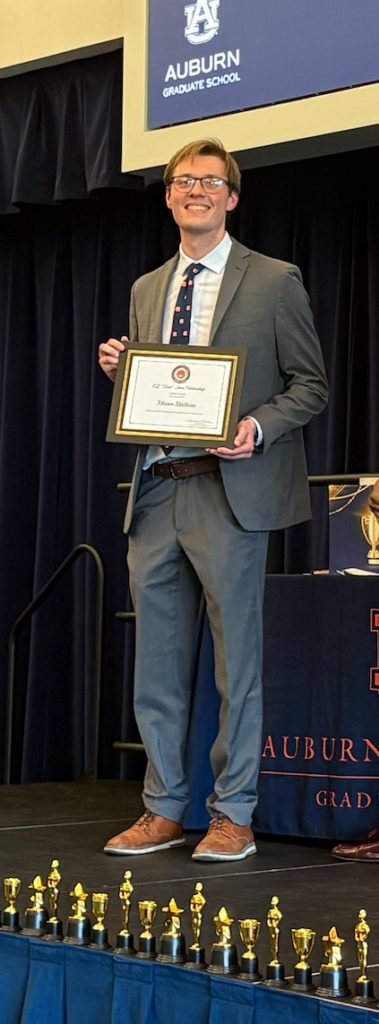
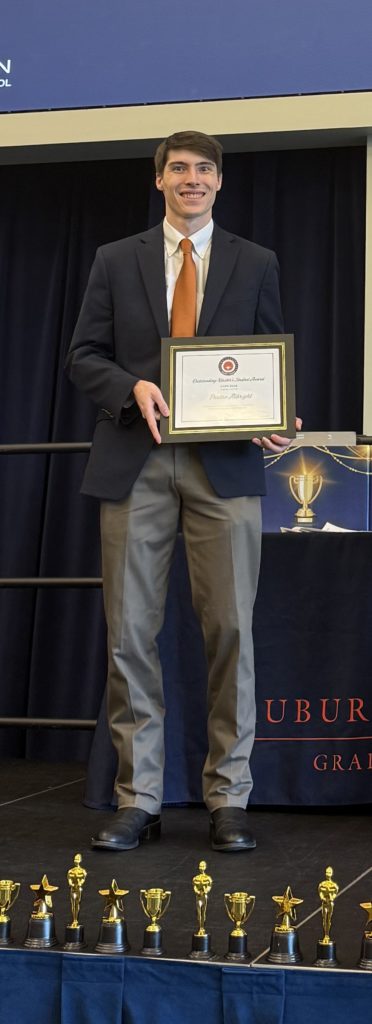
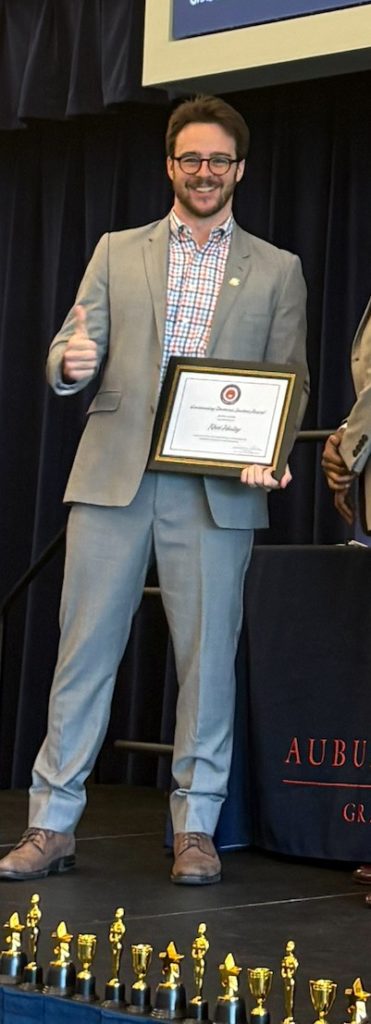
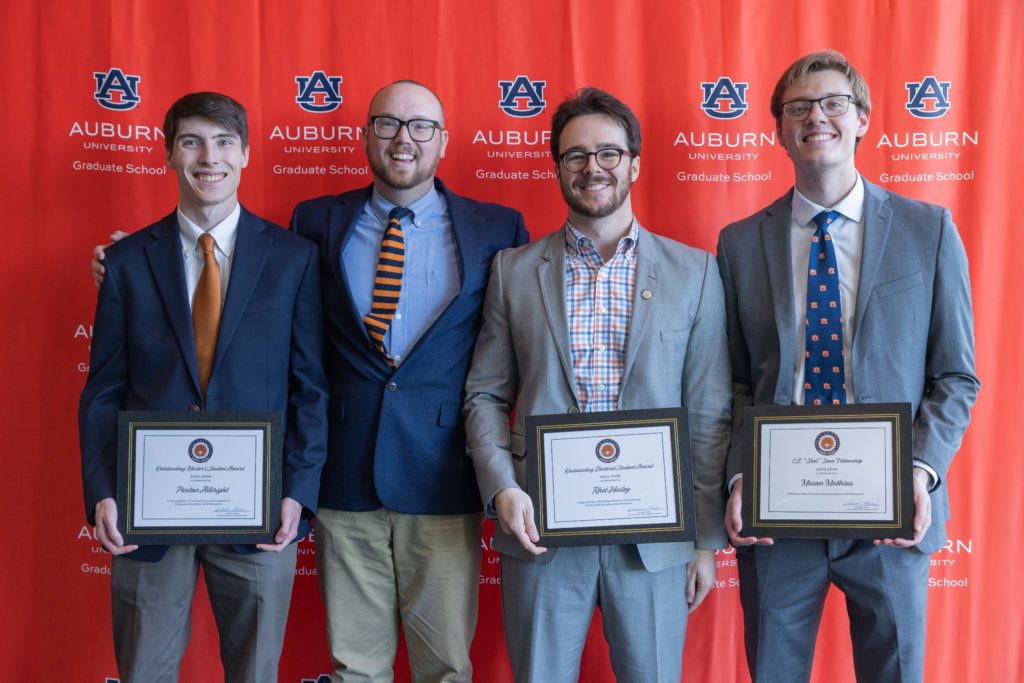
The WeBR Lab is proud to celebrate the accomplishments of three of our outstanding members who were recognized during Auburn University’s Graduate Award Ceremony. Their dedication to research, leadership, and academic excellence continues to reflect the collaborative spirit and innovation that drive our lab forward.

Rhet Hailey received the Outstanding Doctoral Student Award, recognizing his exceptional contributions throughout his doctoral studies.

Paxton Albright was honored with the Outstanding Master Student Award for his academic achievements and contributions as a graduate researcher.

Mason Mathias was recognized as a recipient of the C.L. “Shot” Senn Fellowship, an award presented to graduate students who demonstrate outstanding leadership, character, and achievement. As a former Auburn student-athlete. His transition from athletics to graduate research highlights the diverse paths and experiences that contribute to innovation and success within the Auburn community.

Congratulations to Rhet, Paxton, and Mason on these well earned recognitions. The WeBR Lab is proud to celebrate your achievements and anticipates your ongoing success in research, leadership, and more.

WeBR Lab Back-to-Back Representation at the American Society of Safety Professionals

The American Society of Safety Professionals held its first annual convention at Auburn University, bringing together key themes such as human systems integration and occupational safety. With its broad focus on human-centered robotics, the WeBR Lab was well-positioned to contribute and showcase its work.

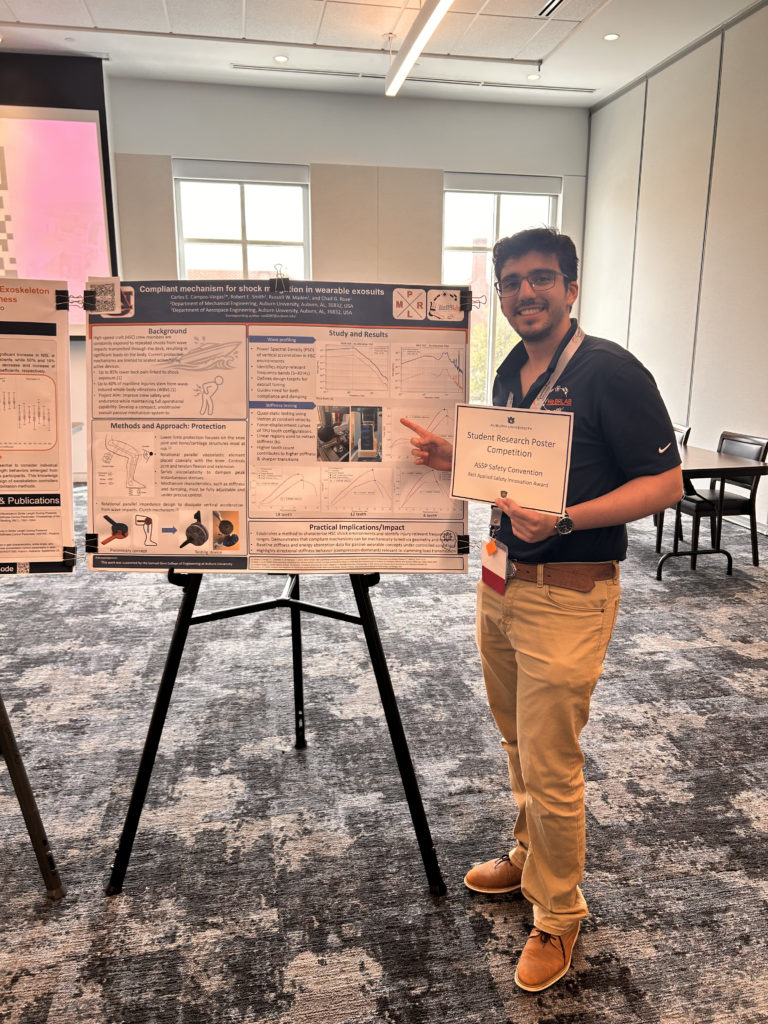
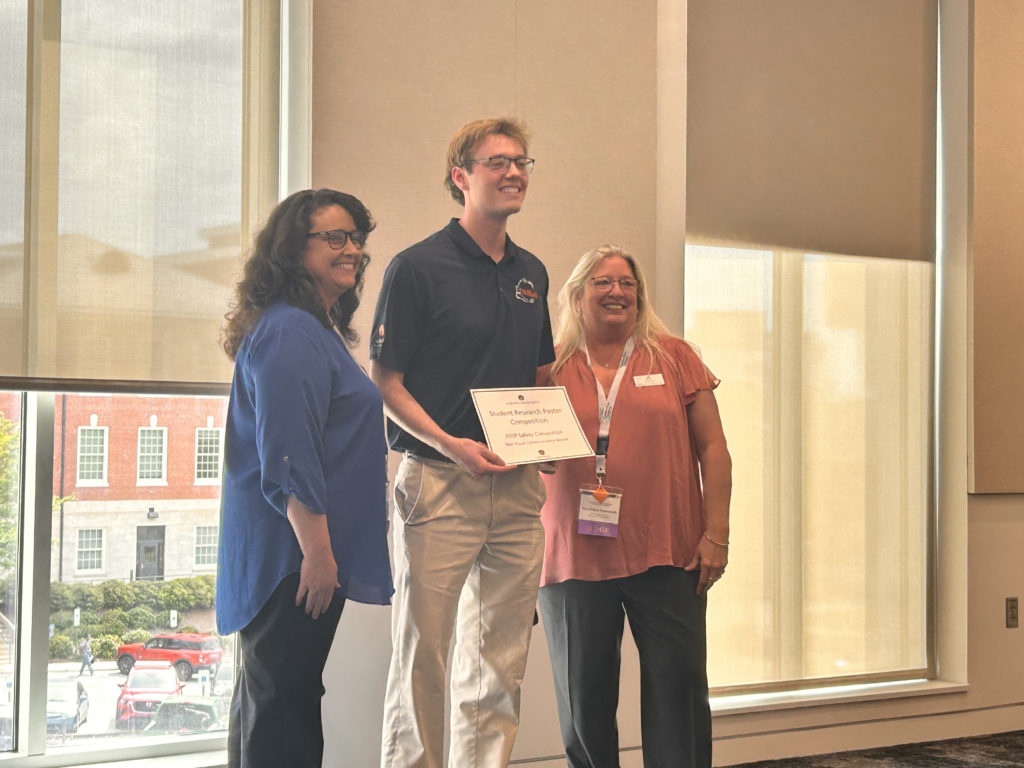
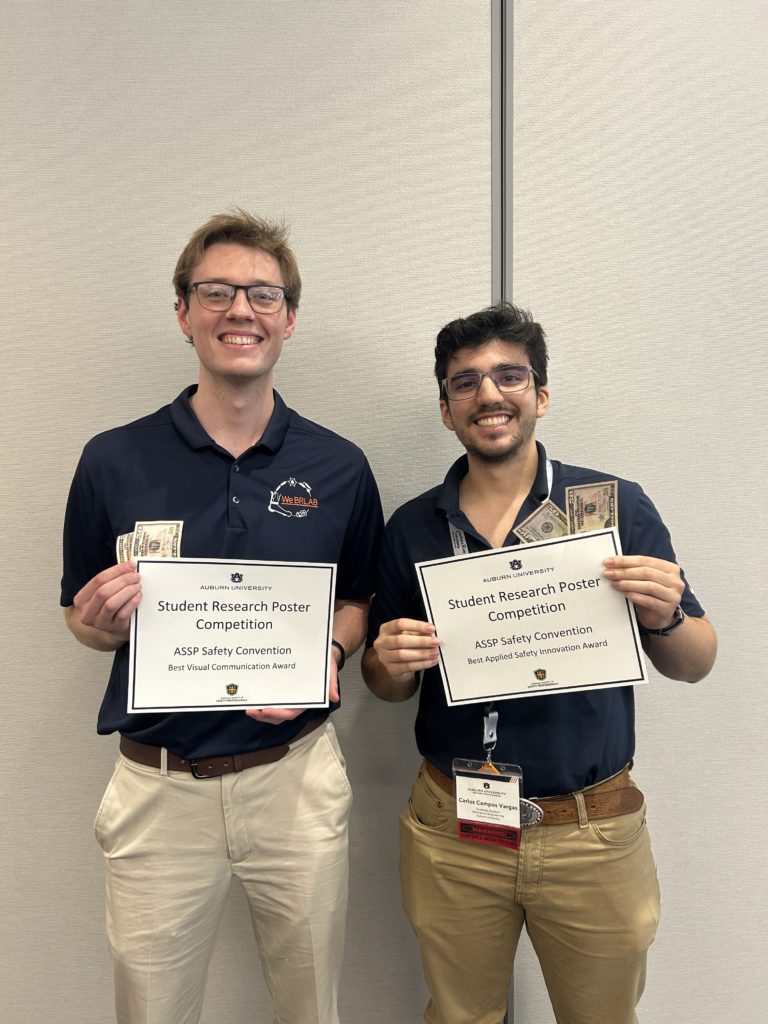
The dynamic duo Carlos E. Campos Vargas and Mason Mathias participated in the Student Research Poster Competition, earning recognition in special categories:

  • Applied Safety Innovation Award – Carlos E. Campos Vargas
  • Best Visual Communication Award – Mason Mathias

The convention also fostered meaningful discussions around collaboration and partnerships, compliance and human systems integration, noise attenuation in the workplace, and advancements in motion capture analysis technologies.

We look forward to future iterations of this growing event.

2026 Graduate Engineering Research Showcase (GERS)

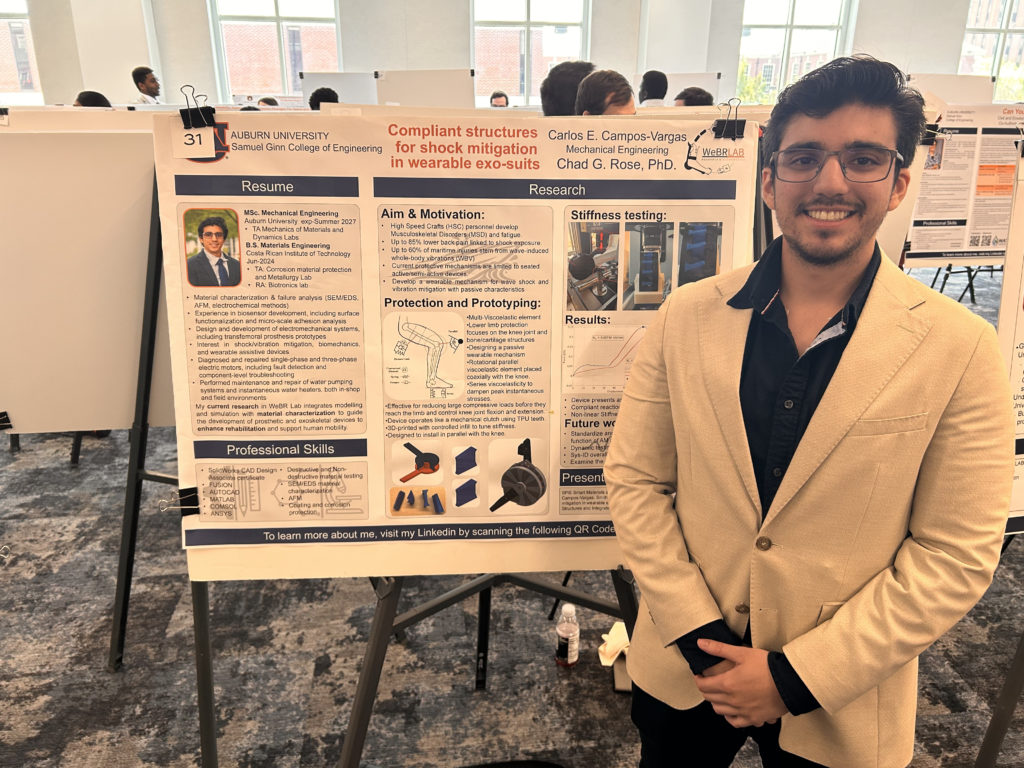
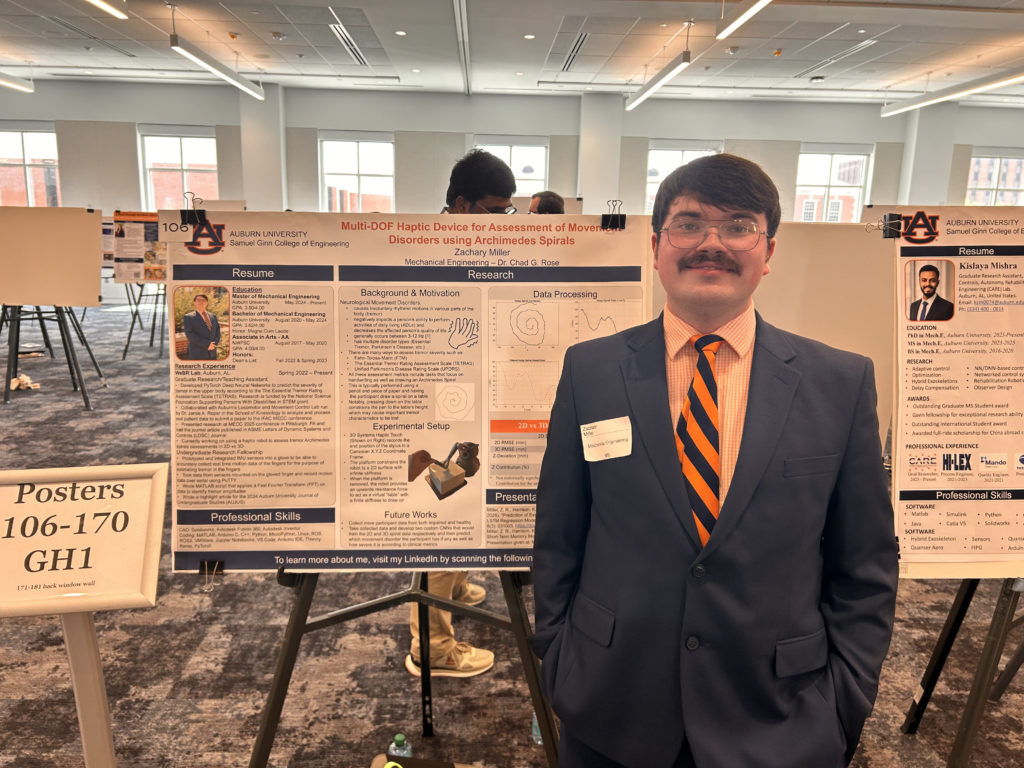
The team once again participated in one of Auburn’s most anticipated and well-attended research showcases. The WeBR Lab was proudly represented by:

Carlos E. Campos Vargas

Compliant Structures for shock mitigation in wearable exosuits

Zachary Miller

Multi-DOF Haptic Device for Assessment of Movements Disorders using Archimedes Spirals

Mason Mathias

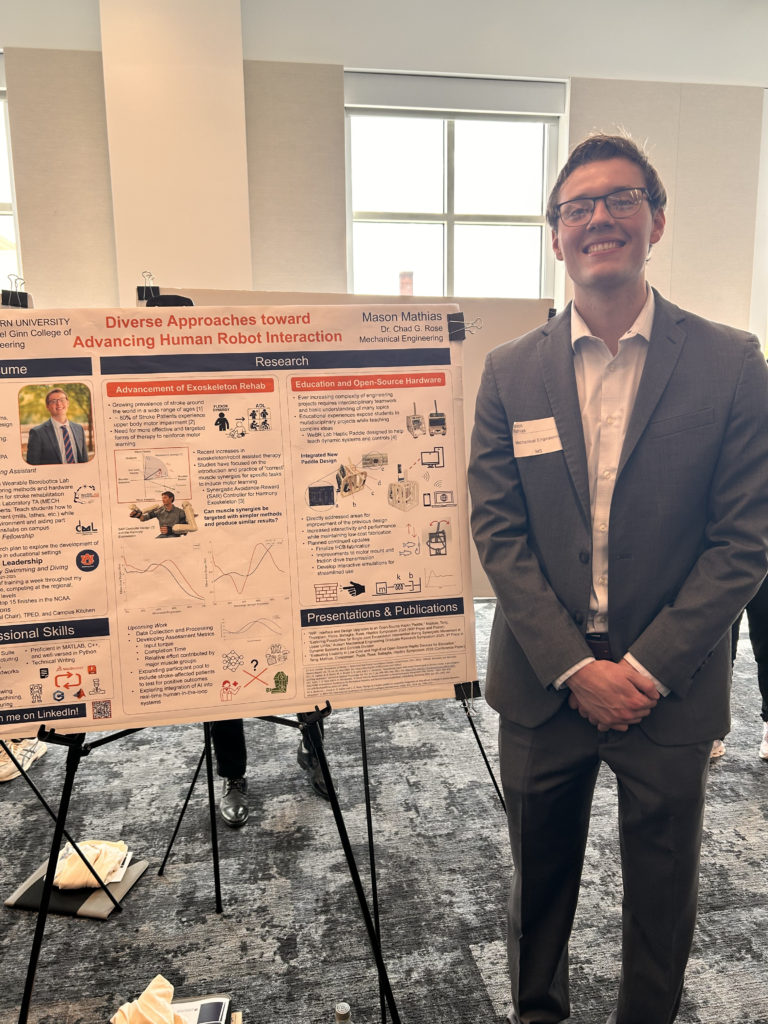
Diverse Approaches toward Advancing Human Robot interaction

Their hours of dedication were evident in both their posters and presentations, showcasing innovative work in human–robot interaction, injuries preventions and rehabilitation assessment.

We’re proud of the team’s continued effort and presence at this outstanding event.

Congratulations to all presenters!

WeBR Lab on 2026 Auburn Research Symposium

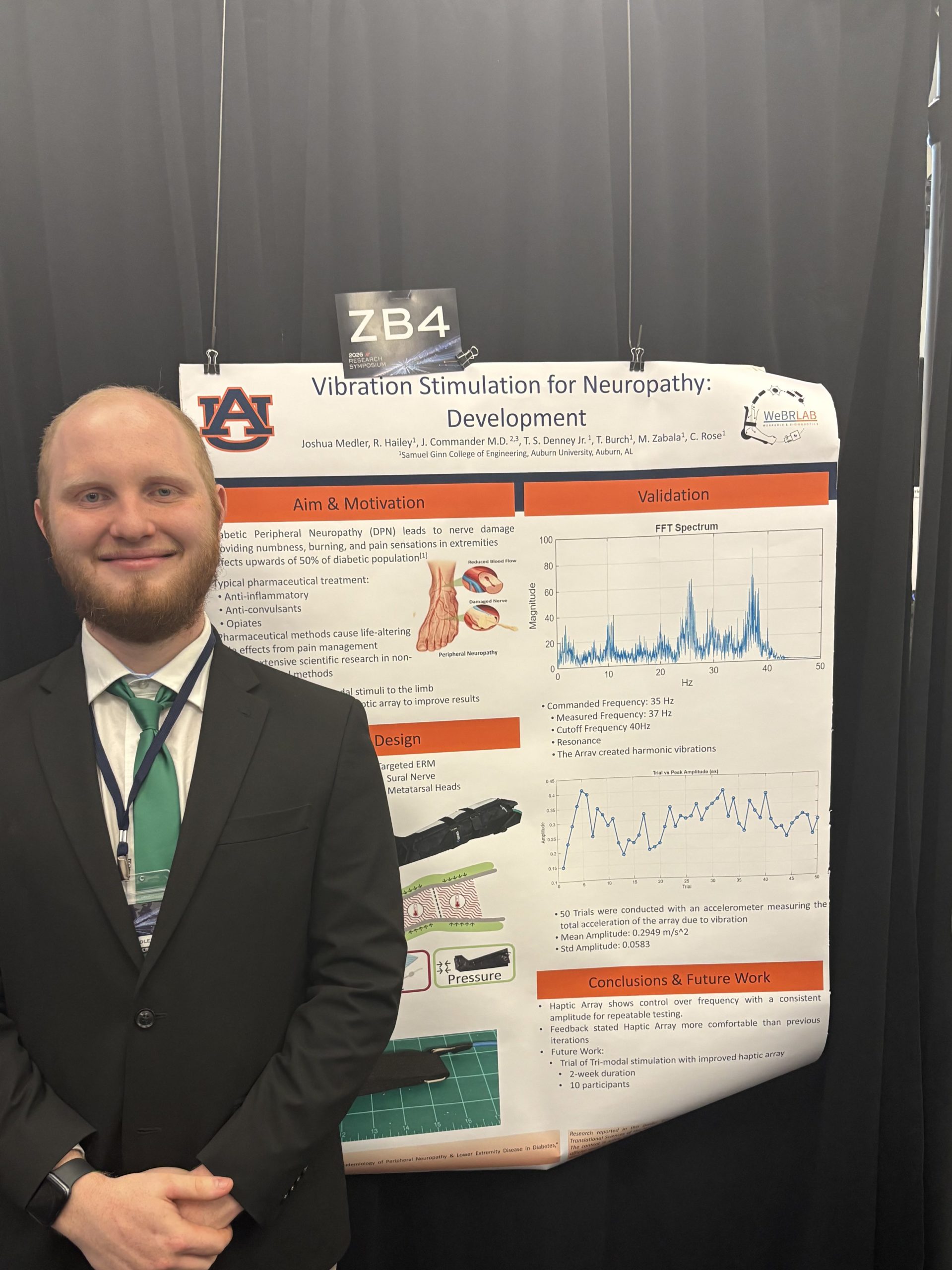
Joshua Medler represented the WeBR Lab with research titled “Vibration Stimulation for Neuropathy” at the annual Auburn University Research Symposium. Building upon ongoing work within the lab, this research explores the use of haptic-based stimulation in wearable robotic devices to help address Diabetic Peripheral Neuropathy by mitigating nerve damage and improving patient outcomes.

We’re proud to see this work continue to evolve and contribute to the advancement of human-centered solutions in healthcare and rehabilitation. Congratulations to Joshua on a strong presentation!