Who leads research in biomedical sensors or sustainable materials? Who’s advancing combustion physics, aero-propulsion or renewable energy?
Junior faculty members new to campus need to know who they can collaborate with and whose research intersects with their own.
What about senior faculty? Many opened their respective laboratories years ago, and they’ve watched peer researchers come and go. For them, the question isn’t how to get started — it’s how to keep discovering, how to stay connected and how to ensure their legacies continue to grow.
Both ask a familiar question: “Where does collaboration begin?” Finding the answer often meant months of hallway introductions, chance conversations and out-of-town conference meetups with researchers at peer institutions.
Thanks to AUSME (Auburn University Subject Matter Experts), a new artificial intelligence-powered, Samuel Ginn College of Engineering-developed web platform, those questions can be answered in seconds.
AUSME, which maps expertise across campus and connects researchers who might have never met, is designed for a range of users: students seeking research mentors, faculty members pursuing interdisciplinary grants, administrators organizing strategic initiatives and external partners looking to connect with subject-matter experts at Auburn.
Associate deans for research across campus are taking note.
The challenge of academic networking
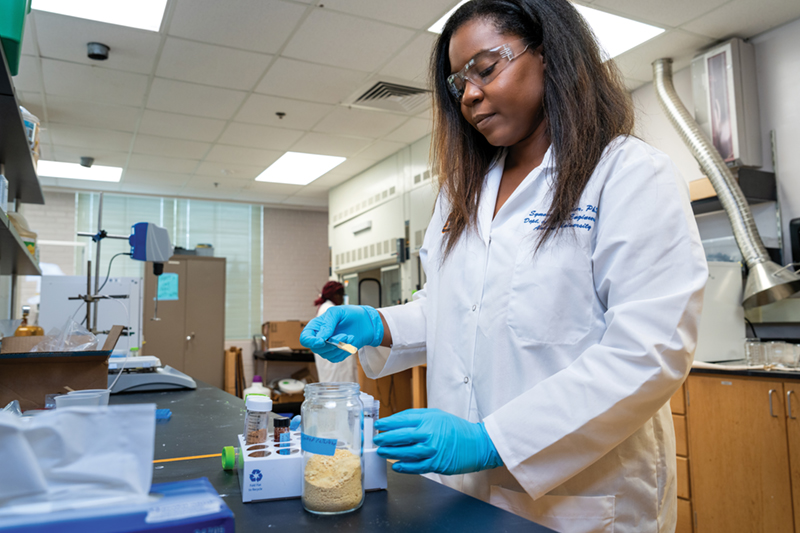
pecan shells as an alternative to synthetic fibers. AUSME can help Alexander connect with researchers in fields such as materials science, polymer engineering or environmental engineering to advance this work.
“In the past, if you were new to Auburn, finding collaborators could be a significant barrier,” said Sushil Adhikari, interim associate dean for research in the College of Agriculture, professor of biosystems engineering and director of Auburn’s Bioenergy and Bioproducts Center. “You didn’t know who was working on what, and without a tool to guide you, it could take five or even 10 years before you really knew enough people to build strong proposal teams. AUSME changes that completely.
“We have a lot of new faculty members across departments that I don’t have the same sort of relationship with that I used to have. This tool helps me discover new people hired in the past two to three years,” he added.
The challenge AUSME addresses runs deeper than individual networking difficulties, said Mark Liles, associate dean for research in the College of Sciences and Mathematics.
“There are many faculty who need connections and partnerships but don’t have the network or the professional connections to find them,” he said. “It’s also hard to know who has the right expertise for your work. AUSME is fantastic because it makes those connections easier. It opens doors to collaborations that might never have happened otherwise. We researchers often tend to be siloed. We have our own worlds that we live in, our own scholarship, our own disciplines. This tool can bring people together.”
How does it work?
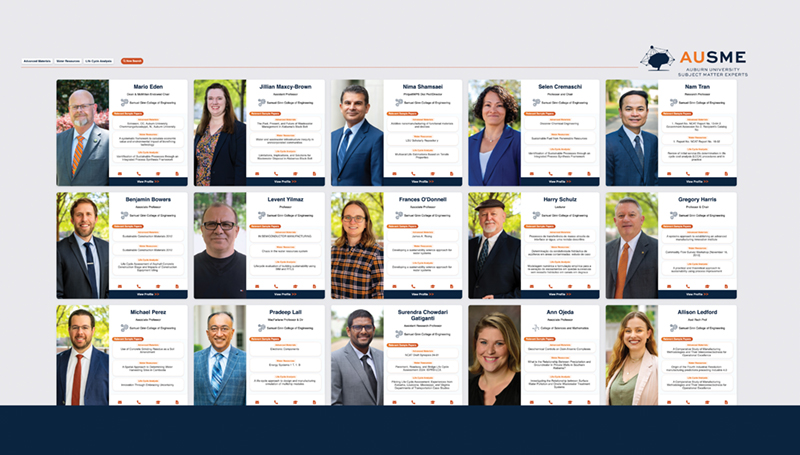
AUSME compiles publicly available research data — including faculty publication records, citation metrics, co-author networks and academic backgrounds — into interactive, easy-to-navigate profiles. Users can search by keyword, filter by department or topic and even explore similar profiles based on shared research interests or collaboration histories.
Just like that, a match made in cross-disciplinary research heaven is made. For Liles, who tested the system over a weekend by typing in a pathogen he studies, the results were eye-opening.
“I was really surprised how many different researchers across campus have had expertise with the pathogen I work with,” he said. “It made me realize how many people share similar research interests.”
Allan David, associate dean for research in the Samuel Ginn College of Engineering, believes AUSME will fundamentally change how collaborations form.
“Collaboration is everything,” David said. “AUSME is designed to foster meaningful, well-aligned partnerships that make sense academically and operationally. By giving researchers greater visibility into what others across the university are doing, we’re unlocking a level of transparency and synergy we haven’t had before. I see this as an enabling platform for everyday connections and major institutional initiatives.”
From web search to collaborative discovery
AUSME’s user-friendly design makes it equally effective for students and faculty. The website allows users to enter keywords like “machine learning” or “structural engineering,” and the system scans publication data to rank relevant faculty. Results display names, departments, publication snippets and citation metrics. Users can refine searches by department or topic, then click through to detailed profiles with contact information.
One of the platform’s most powerful features is its ability to display related researchers based on overlapping interests or co-authored publications. This allows users to identify highly relevant, yet sometimes lesser-known, collaborators they might not have found otherwise.
David noted that this kind of intelligent discovery mechanism could dramatically change the way Auburn researchers build partnerships across departments.
“Tools like this don’t just help us collaborate more. They help us collaborate smarter, and that’s what drives real innovation,” David said.
“With AUSME, we’re not only facilitating discovery, but we’re also supporting interdisciplinary work that defines the future of research. I believe this platform will become an essential tool for every researcher at Auburn,” he added.
The team behind the tool
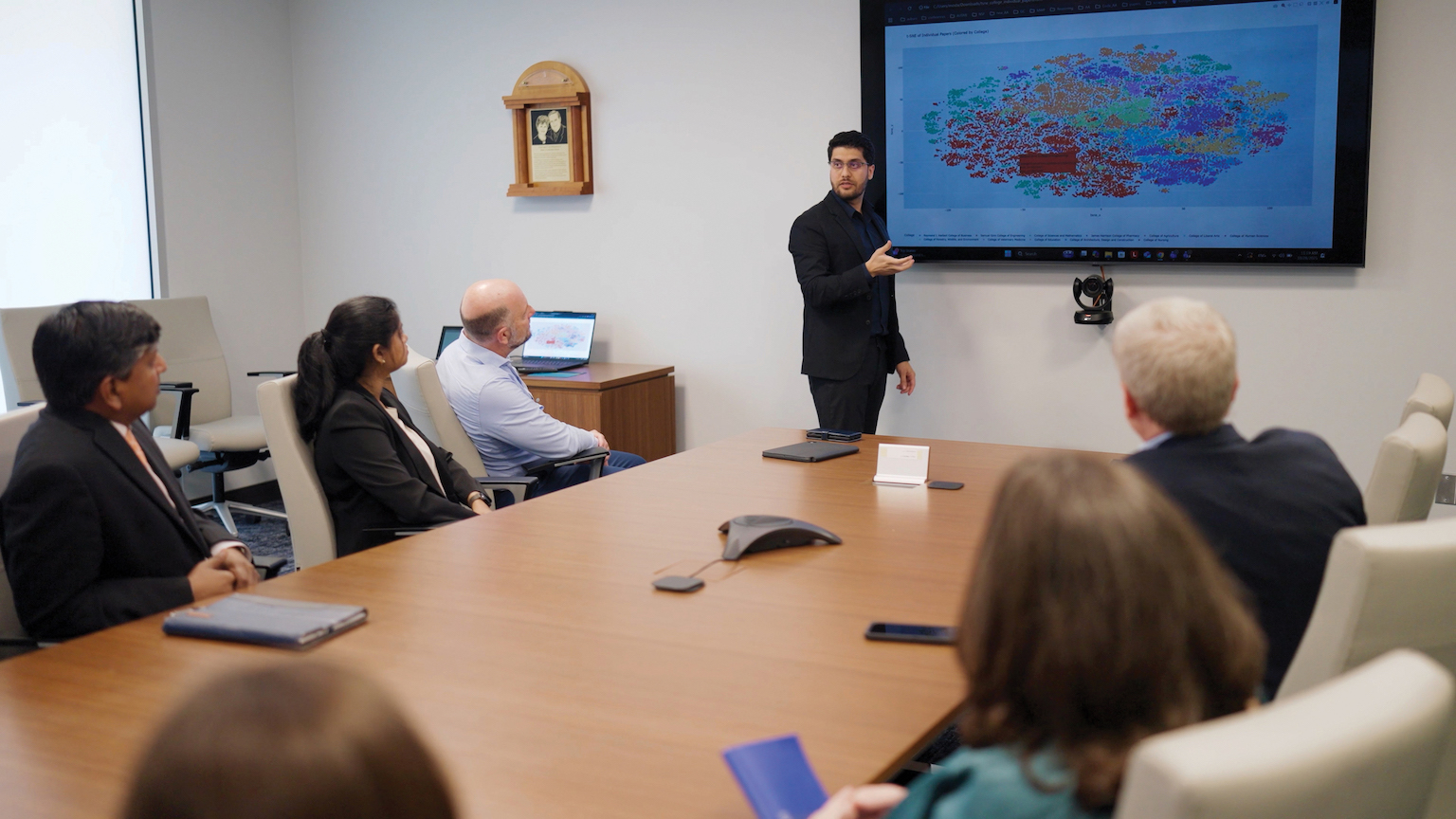
Drawn from across the College of Engineering’s research, communications and computing units, the AUSME development team included Auburn Engineering Research Data & AI Development Coordinator Mostafa Rahgouy, who served as an AUSME AI developer, frontend and backend specialist; frontend specialist Soundarya Korlapati, a senior research engineer at the Auburn RFID Lab; Tyler Patterson, senior application systems analyst; Emily Maddox, manager of Salesforce and data administration; Kelley Terry, director of research program development and grants; Shannon Price, director of network services; and others who contributed time and expertise to the project.
“This team didn’t just create a database — they built an engine for discovery,” said Gerry Dozier, director of the Auburn University Center for Artificial Intelligence and Cybersecurity Engineering and McCrary Eminent Chair Professor. “Their commitment to supporting Auburn’s research enterprise, through smart, forward-thinking tools like AUSME, reflects the kind of innovation we need to solve real-world problems.”
For David, he’s excited to see AUSME continue to evolve.
“The development team is already working on new features like AI-generated research summaries, enhanced filtering options and better visualizations of collaborative networks,” David said. “AUSME will become even more useful over time, adapting to the needs of our faculty and reflecting the dynamic nature of research itself. We’re just getting started, and the potential here is enormous.
“The team that built AUSME understands research. They’ve created a tool that’s not just functional, it’s also strategic. AUSME helps surface the kind of partnerships that drive innovation: when a mechanical engineer connects with a biomedical scientist, or when a cybersecurity expert collaborates with a civil engineer. That kind of work doesn’t happen by accident. It happens when you connect the right people. AUSME makes that possible,” he added.
The vision extends beyond simple faculty searches.
Advanced features under development include proposal matching capabilities that could transform how research teams respond to funding opportunities.
Setting the standard for innovation
Dozier said the platform’s value extends beyond Auburn’s borders. External partners, from national laboratories to emerging startups, can leverage AUSME to understand Auburn’s research capabilities with unprecedented clarity.
“If you’re an external partner, from a national lab or a startup, AUSME gives you a transparent, intelligent way to understand what Auburn has to offer,” Dozier said. “You’re not just seeing names and titles. You’re seeing networks, research impact and expertise in context.”
With additional colleges across campus poised to come on board in the coming year, AUSME’s planned expansion generates significant anticipation.
“What we’ve created isn’t just solving Auburn’s collaboration challenges, it’s pioneering a new model for how universities can harness their collective intellectual capital,” Dozier said. “I expect we’ll soon see institutions across the country looking to Auburn’s example, asking how they can build their own versions of what we’ve started. That’s the mark of true innovation — when others want to follow where you’ve led.”

