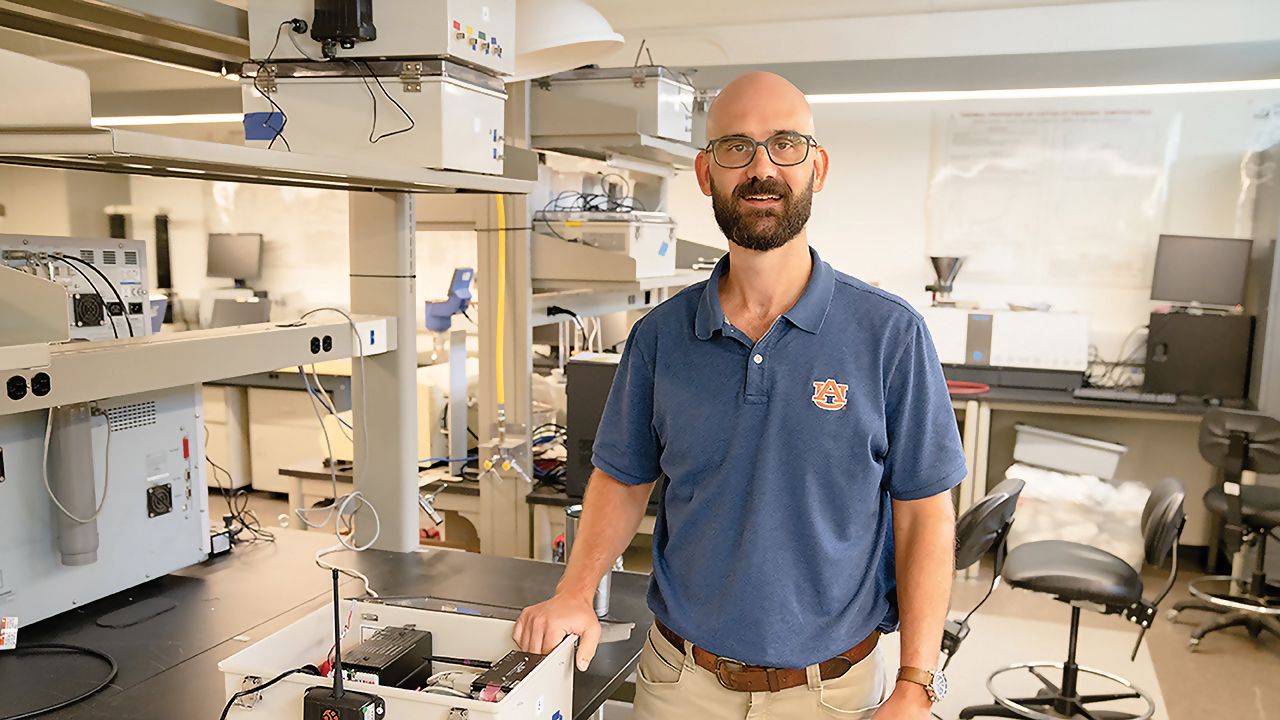
Researchers at Auburn University are studying the effects of natural light in broiler houses on bird performance and welfare.
The team, including agricultural engineers, animal scientists and extension specialists, received a $300,000 USDA grant to investigate how natural light impacts commercial broiler flocks’ growth and welfare.
John Linhoss, assistant professor of biosystems engineering, and his team will also develop methods to measure the environmental impact of using natural light and prepare presentations for poultry producers.
“In the past decade, there’s been a push to include more animal welfare measures in broiler production,” Linhoss said. “We aim to provide science to guide producers’ decisions.”
Most broiler houses currently use LED lighting with no windows for energy efficiency and to avoid uneven lighting, which can cause varied chicken activity.
However, growing consumer concerns about food production have led some poultry processors to require natural light under animal welfare guidelines, such as those by the Global Animal Partnership.
This experiment will continuously measure light intensity and duration in two setups — one with natural light and one with traditional LED light. Researchers will map light and temperature patterns and compare bird behaviors, feed intake, growth and mortality.
Alabama is the second-largest producer of broilers in the U. S. by head, with a cash value of nearly $3.5 billion, according to the USDA’s latest census of agriculture. Broilers account for 59% of Alabama’s total agricultural economic output. Linhoss’ research has the potential to help Alabama broiler producers adapt to shifting consumer demand by providing insight into the optimal way to incorporate natural light in their broiler houses.

